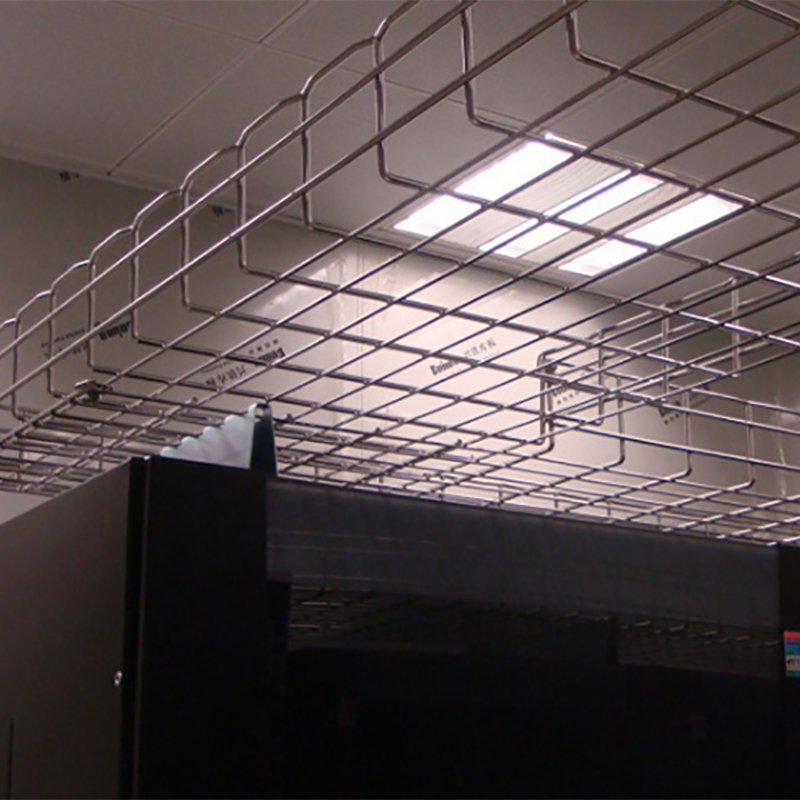
Wire mesh cable tray has quietly displaced heavier support systems as the default overhead platform for data cabling in new data center construction. Shanghai Qinkai Industrial Co., Ltd., a manufacturer of NEMA-standard cable tray and cable ladder systems for data center, power, and infrastructure projects, says the change is visible in the specification mix its engineers review every week: for white space cabling — fiber, copper, and low-voltage runs above the racks — wire mesh tray is now the starting point on most drawings, not an alternative to be debated.
"Five years ago, mesh tray was the cost-saving option, and the conversation was about whether it could carry the load," the company said in a statement. "Now the conversation has inverted. Owners and EPC contractors assume mesh for data cabling and ask us to prove where a heavier system is actually necessary. AI changed the cable math, and the support system followed."
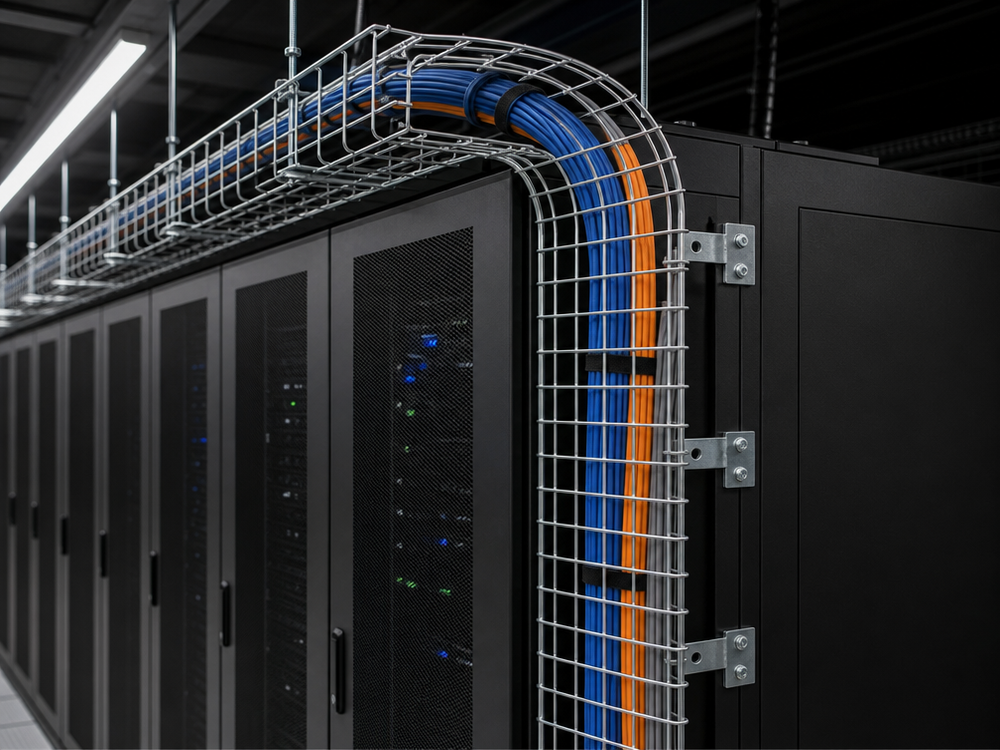
The reason is straightforward: AI racks carry more cabling than any previous generation of IT equipment. GPU-based training clusters require substantially more network connections per cabinet — front-of-rack and back-of-rack fiber, management links, and high-current power feeds — while generating heat loads that make every obstruction in the airflow path a design risk. A support system that once only needed to hold cable off the floor now has to do three jobs at once: carry more cable, dissipate more heat, and tolerate far more frequent change.
The third job is the one most often underestimated. AI infrastructure is reconfigured aggressively — racks are populated in waves, clusters are expanded, and cabling is rerouted as training topologies evolve. In that environment, a support system built for permanence becomes a liability. Cables must be laid in and lifted out of overhead runs quickly, without threading through closed channels or unwrapping bundle ties, and tray sections must extend with simple couplers when a row grows. Wire mesh tray is the only mainstream platform engineered for that rhythm of work.
The properties that make wire mesh cable tray — also called wire basket cable tray — the practical default in white space are well understood by engineers but worth restating in the AI context:
• Ventilation as a thermal control. The open mesh profile is roughly 60 percent open, so heated air rises freely through the tray instead of pooling around cable bundles near the ceiling. For operators managing hot aisles and overhead airflow, open-mesh support is increasingly written into the thermal design rather than left to the electrical contractor's discretion.
• Speed of moves, adds, and changes. Cables rest on the tray and lift out in seconds. Runs are adjusted on site with bolt cutters and reconnected with splice couplers — no welding, no special tools, no crew of riggers for a single cable drop.
• Visibility for troubleshooting. An open tray lets a technician trace a fiber run at a glance. When a link fails, finding the physical path — and the damaged segment — is dramatically faster than with covered or enclosed systems, and audits carry less risk of touching the wrong cable.
• Lower dead load overhead. Mesh systems are among the lightest cable support options per meter of run, which reduces the load on hanger rods, trapeze supports, and the building steel in ceiling-suspended installations.
• Cleanliness in critical spaces. Open mesh does not trap dust the way solid-bottom and enclosed raceways do — a quiet advantage in facilities where particulate contamination matters.
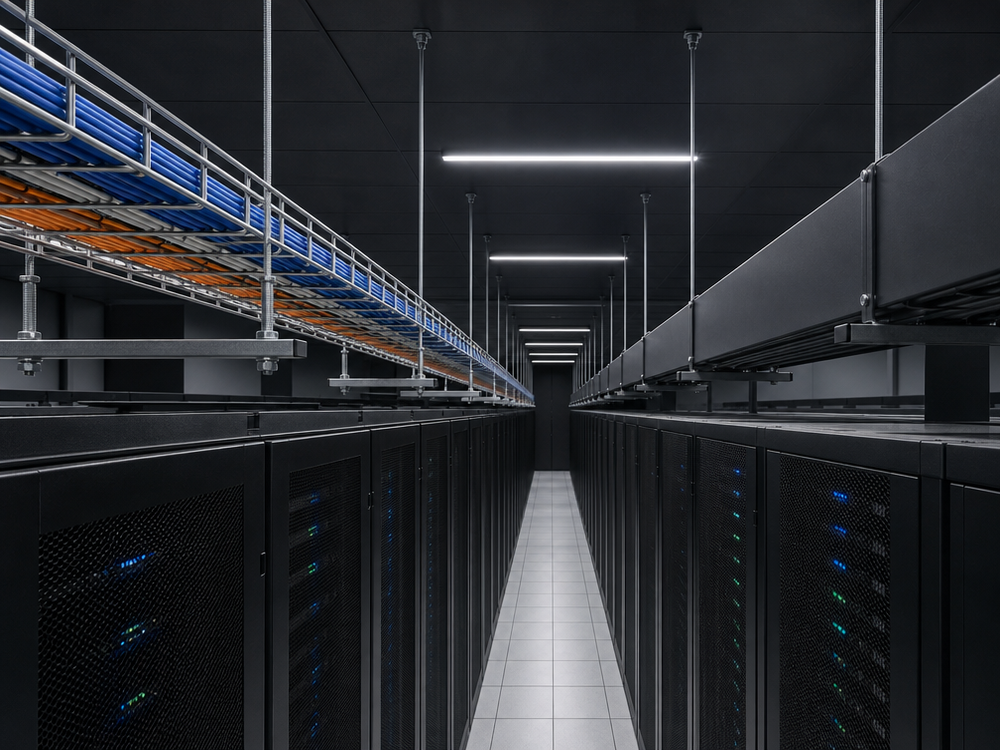
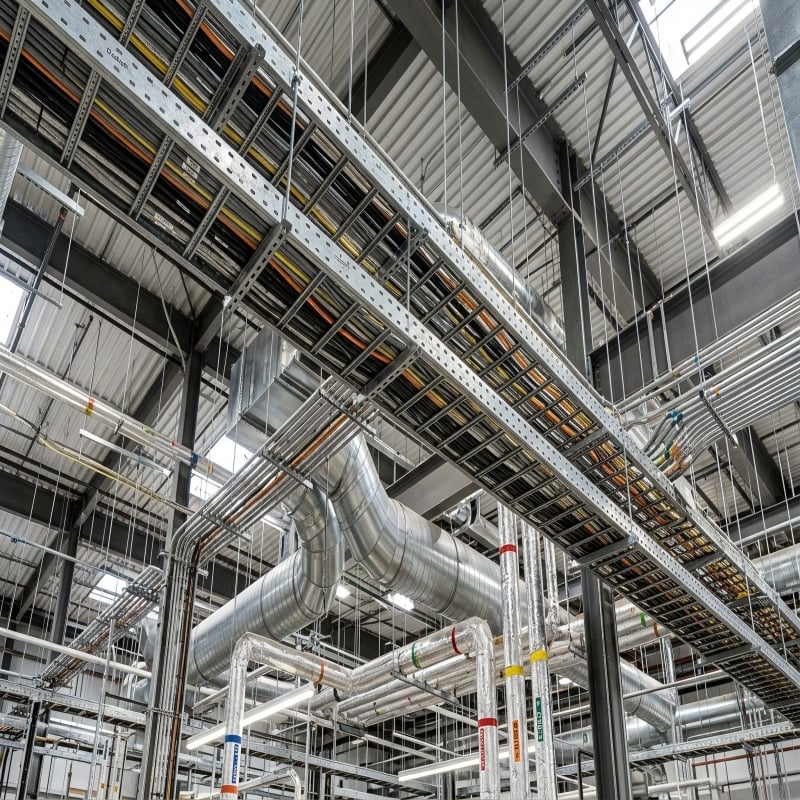
None of this makes cable ladder obsolete. Heavy power feeders — large gauge conductors carrying high current from switchgear to distribution — still belong on ladder or ventilated tray systems with the load capacity and rung spacing those circuits require. The differentiation is functional: mesh for the high-count, ever-changing data and low-voltage cabling that dominates white space; ladder for the smaller number of power circuits that need real structural muscle. Contractors who specify both correctly, and source both from one supplier with one drawing set, avoid the interface problems that appear when tray families are mixed from multiple vendors.
Qinkai's engineering team says five decisions separate a data center cable support system that serves the facility for a decade from one that gets ripped out at the first major upgrade:
• Match the tray family to the cable. Reserve wire mesh and wire basket tray for fiber, copper data cabling, and low-voltage runs; keep heavy power feeders on cable ladder sized to their actual load.
• Apply fill limits and physical separation. Respect the fill-ratio limits in the governing electrical code and the project's TIA/BICSI guidance, and separate power from data — in different trays or clearly divided sections — to control electromagnetic interference.
• Size supports against published load tables. Support spacing is a function of tray width and fill weight, not habit. Specify against the manufacturer's load tables and confirm hanger rods, trapeze supports, and splice hardware match the selected load class.
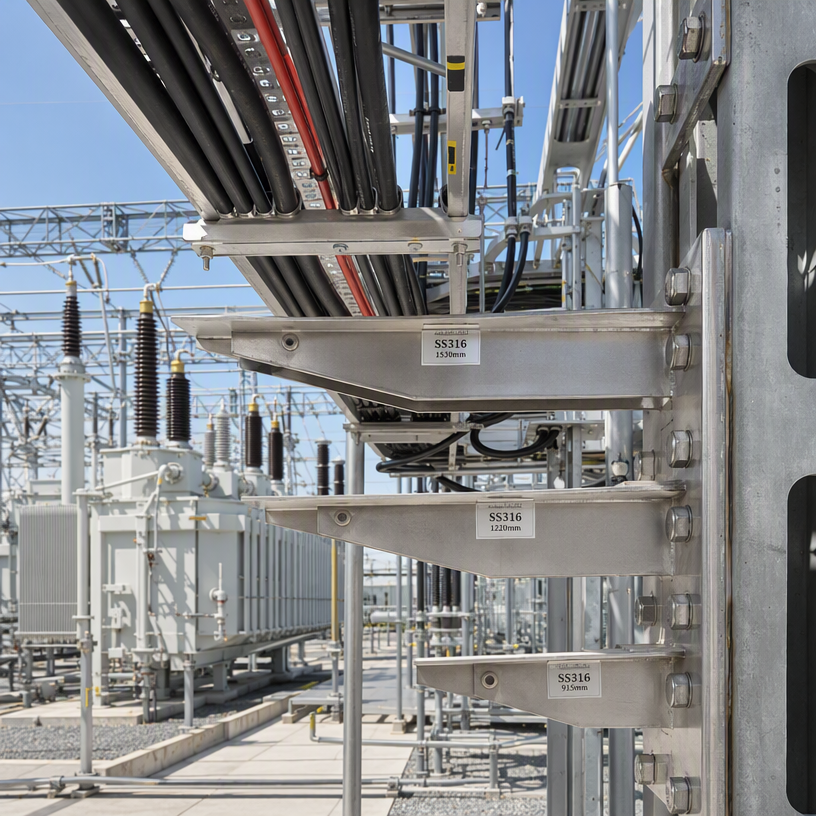
• Select the coating for the environment. Pre-galvanized or powder-coated steel suits controlled white space; hot-dip galvanized steel is the standard answer for humid plant rooms, cooling areas, and exterior portions of the facility. Stainless steel is reserved for aggressive coastal or chemical atmospheres.
• Protect fiber radius and never skip bonding. Fit radius-control fittings and drop-out guides wherever fiber changes direction, and bond every tray section with listed connectors or bonding jumpers, verifying continuity per the applicable electrical code. Bonding is a code requirement, not an installation preference.
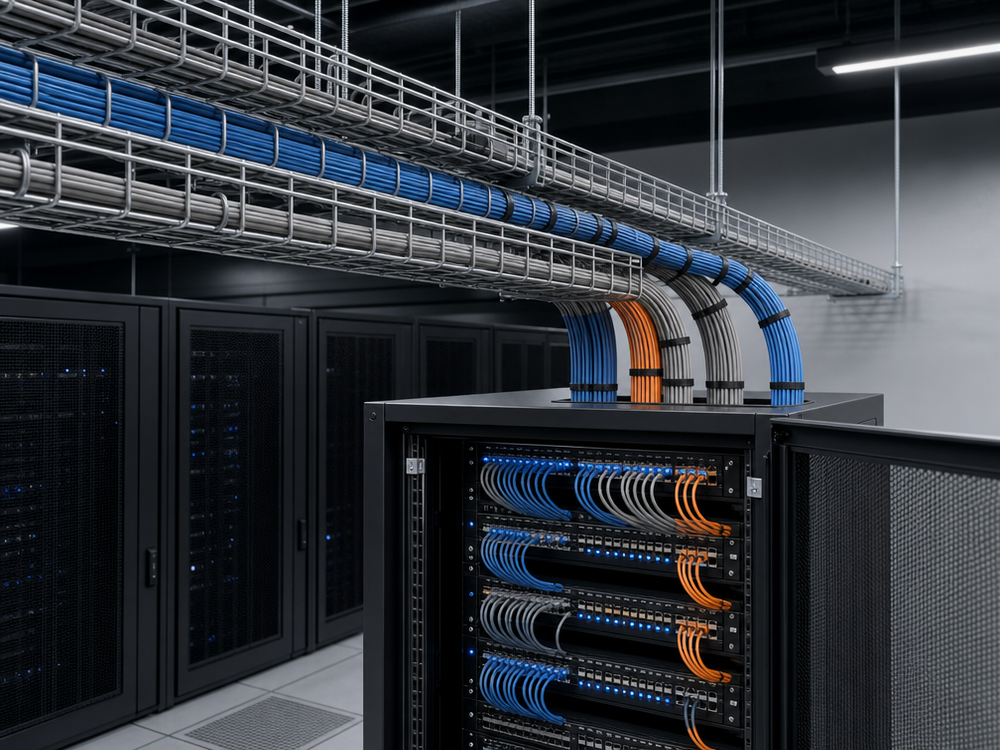
The standardization on wire mesh tray is reshaping how data center cabling is purchased. Buyers are consolidating around suppliers that can deliver a complete, documented system — straight sections, couplers, fittings, and supports manufactured to consistent dimensions, shipped with load tables, material certificates, and coating reports — so the installed system can be verified against the drawing at handover. The suppliers winning specification battles are not necessarily the cheapest per meter; they are the ones whose documentation survives an EPC engineer's review.
The same trend is pulling specification decisions earlier into the project cycle. Qinkai reports that mesh tray requirements increasingly arrive at the RFQ stage with thermal and structural assumptions already made — tray width, fill margin, support spacing, and compliance basis defined before the general contractor is even selected. For manufacturers, that means engineering support capacity, not just rolling capacity, has become the competitive battleground.
"The market stopped buying cable support by the meter a long time ago," the company said. "Buyers are purchasing a documented system with predictable load performance, predictable installation cost, and the flexibility to absorb several generations of IT change. Wire mesh tray fits that brief better than any alternative we manufacture, and the orders reflect it."
Shanghai Qinkai Industrial Co., Ltd. is a manufacturer and exporter of NEMA-standard cable tray and cable ladder systems, seismic supports, solar mounting structures, LED aluminum profiles, and custom steel hardware. The company serves EPC contractors, distributors, and infrastructure developers across North America, Latin America, the Caribbean, South Asia, and Southeast Asia. All products are manufactured in China and shipped with full material certificates and project documentation.
For media inquiries or project quotations, contact: [email protected] | www.qinkaiindustrial.com
 Hot News
 EN