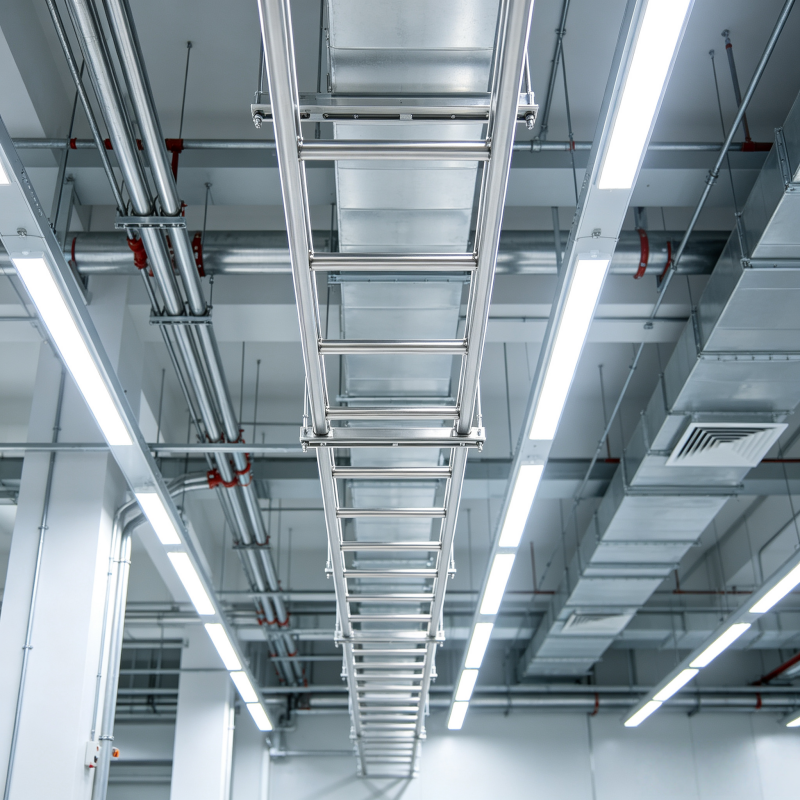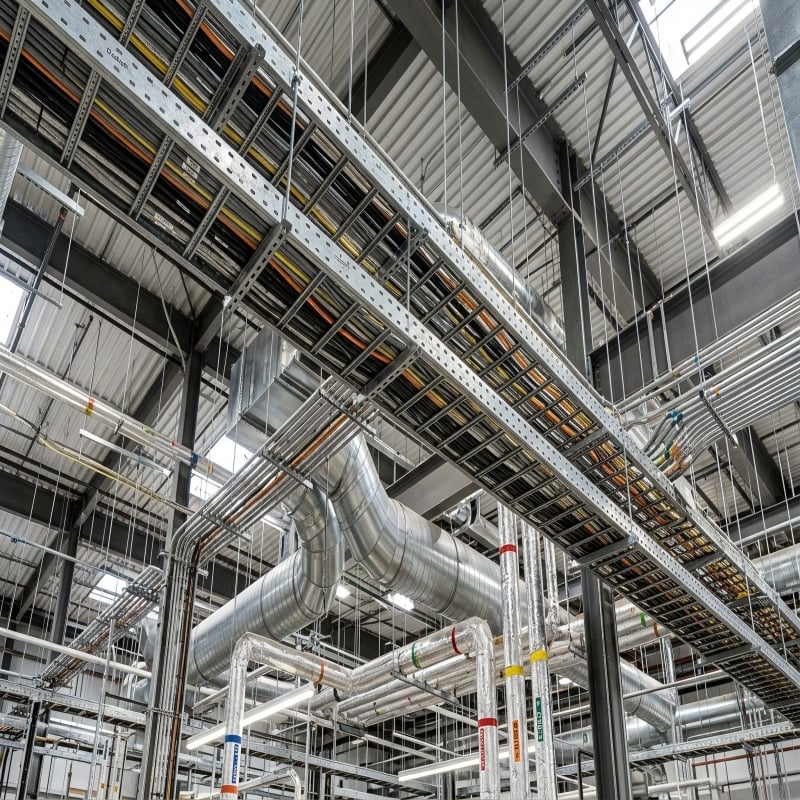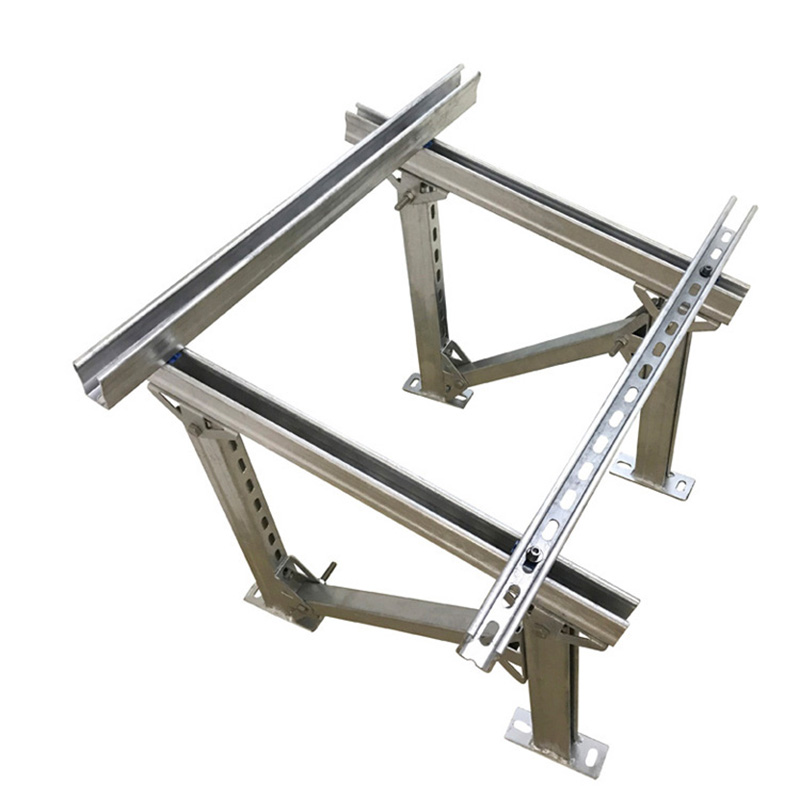
SHANGHAI, Sept. 2, 2026 — Shanghai Qinkai Industrial Co., Ltd., a manufacturer of NEMA-standard cable tray and cable ladder systems serving data center, power, and infrastructure projects, today said wire mesh cable tray — also known as wire basket cable tray — has moved from an option to a default specification for overhead data cabling in new data center white space, as AI workloads push rack densities and cable volumes to levels the industry has not managed before.
"We have watched wire mesh tray go from one of three options on a data center cabling drawing to the baseline in under two years," the company said in a statement. "AI racks carry more fiber and copper than any previous generation of servers, and operators have concluded that an open, lightweight, rework-friendly mesh platform is the only support system that keeps up with their rate of change. The question at the RFQ stage is no longer whether to use wire mesh cable tray, but which coating, which fill ratio, and which load documentation the project requires."

The market data behind the shift is unambiguous. The global wire mesh cable tray market was valued at USD 2.3 billion in 2025 and is projected to reach USD 3.9 billion by 2032, growing at a compound annual rate of 8.1 percent, according to Strategic Market Research. The category is expanding faster than the cable tray market as a whole, reflecting its takeover of data cabling pathways in server halls, network rooms, and telecommunications facilities.
The downstream numbers tell the same story. The data center cable market is projected to grow from USD 12.24 billion in 2026 to USD 18.81 billion by 2032 at a CAGR of 7.4 percent, according to a MarketsandMarkets report published in May 2026, while Global Market Insights values the data center cabling segment at USD 7.1 billion in 2024 and projects an 8.9 percent CAGR through 2034. At the facility level, The Business Research Company estimates data center construction spending at USD 293.69 billion in 2026, rising to USD 382.64 billion by 2030 at a 6.8 percent CAGR. The overall cable management systems market — cable tray, cable ladder, conduit, and accessories — is set to grow from USD 27.89 billion in 2026 to USD 52.83 billion by 2034, a CAGR of 8.31 percent, per Fortune Business Insights.
Underlying all of it is compute demand. Goldman Sachs Research expects data center power demand to grow by roughly 50 percent to 92 GW by 2027, an annual growth rate of about 17 percent between 2025 and 2028 — a buildout pace that forces standardization decisions to be made earlier and executed faster in every project.
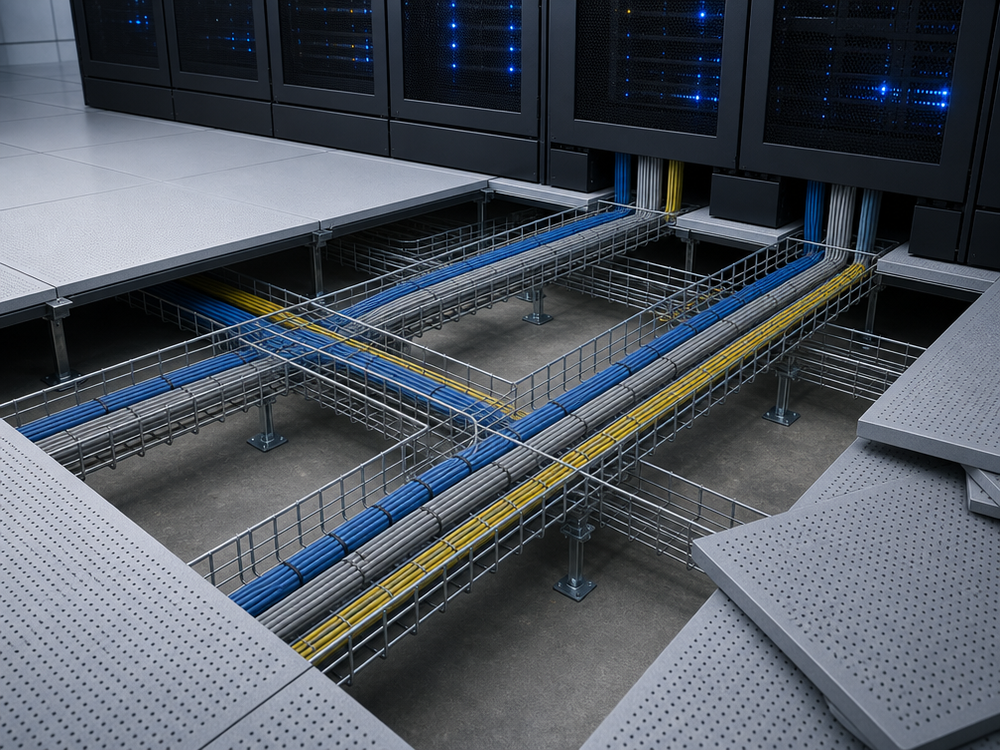
Industry observers point to three specification changes that wire mesh cable tray systems are uniquely positioned to satisfy:
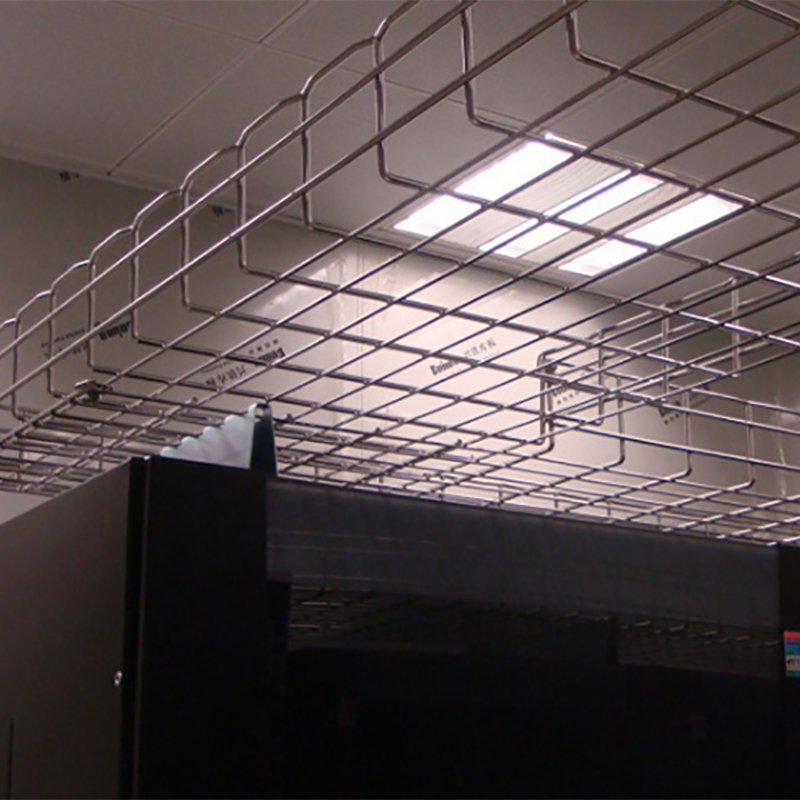
• Ventilation has become a thermal requirement. AI and GPU-based racks generate heat loads that traditional enclosed cable pathways trap near the ceiling. Wire mesh tray is roughly 60 percent open, allowing heated air to rise freely through the tray so cold aisle containment and overhead airflow are not blocked by cable bundles. In high-density halls, open-mesh support is increasingly written into the thermal design rather than left to the electrical contractor's discretion.
• Moves, adds, and changes now drive the design. Data center cabling is treated as a living system. Cables must be laid in and lifted out of overhead runs without threading through closed channels, and trays must extend with simple couplers when a row is expanded. The modular, cut-on-site nature of wire mesh tray makes MAC work dramatically faster — a decisive cost factor when technician time inside a live facility is measured against uptime.
• Documented compliance is a procurement gate. Data center projects increasingly require NEMA VE 1 compliance for metal cable tray systems, NEMA VE 2 installation practice, and NEC Article 392 rules on support, fill, and bonding, alongside TIA-942 pathway design. Suppliers that cannot produce load tables, material certificates, and coating thickness reports are being filtered out at the design stage rather than the bid stage.
With wire mesh tray becoming the default overhead platform, Shanghai Qinkai Industrial's engineering team highlights five specification points that EPC contractors and facility owners should lock down before ordering:
• Match the tray family to the cable. Reserve wire mesh and wire basket tray for fiber, copper data cabling, and low-voltage runs; keep heavy power feeders on cable ladder with the load capacity they genuinely require.
• Respect fill limits and separation. Apply the fill-ratio limits in the governing electrical code and project TIA/BICSI guidance, and physically separate power from data — either in separate trays or divided sections of the same tray — to control electromagnetic interference.
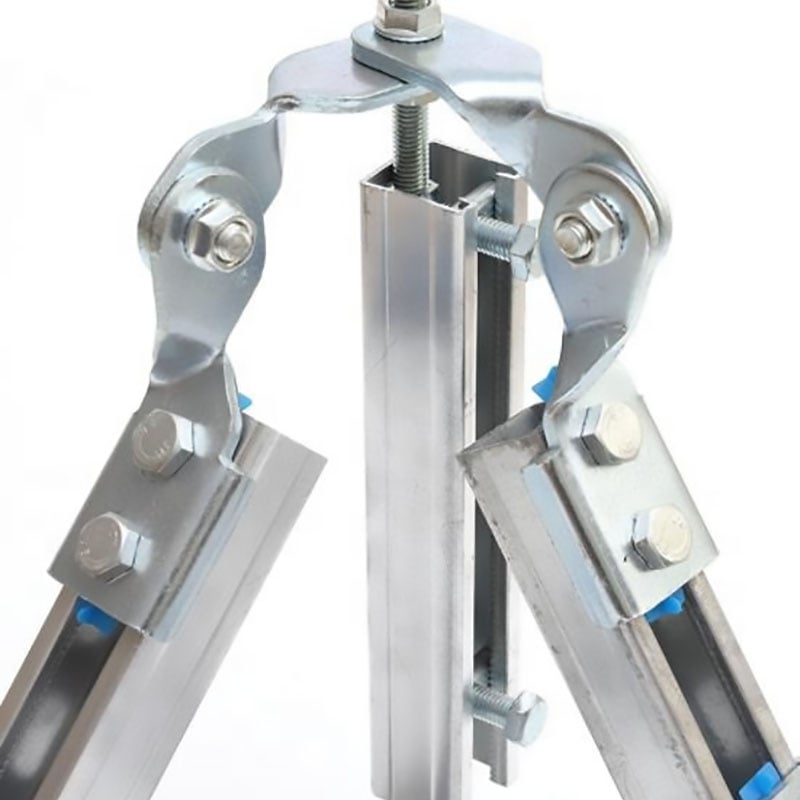
• Size supports against load tables. Support spacing is a function of tray width and fill weight, not habit. Specify against the manufacturer's published load tables and confirm hanger rods, trapeze supports, and splice hardware match the selected load class.
• Choose the coating for the environment. Pre-galvanized or powder-coated steel suits controlled white space; hot-dip galvanized steel is specified for humid plant rooms, cooling areas, and exterior portions of the facility. When in doubt, HDG adds corrosion margin for a small cost premium.
• Never compromise cable radius or bonding. Fit radius-control fittings and drop-out guides wherever fiber changes direction, and bond every tray section with listed connectors or jumpers, verifying continuity per NEC Article 392. Bonding is a code requirement, not an installation preference.

The specification shift is global in reach. Hyperscale projects in North America remain the largest single driver, while colocation and enterprise facilities across Latin America, the Caribbean, South Asia, and Southeast Asia are adopting the same design standards as regional data center markets mature. Qinkai said its export pipeline for data center cable support systems — including mesh, ladder, and ventilated tray configurations with seismic bracing where required — continues to grow as EPC contractors consolidate suppliers that can deliver a documented, code-compliant support system with a single drawing and a single responsible party.
"The market is no longer buying cable tray by the meter," the company said. "Buyers are purchasing a documented support system with predictable load performance, predictable installation cost, and the flexibility to absorb three or four generations of IT change. Wire mesh tray fits that brief better than any alternative we manufacture, and the order book reflects it."
Shanghai Qinkai Industrial Co., Ltd. is a manufacturer and exporter of NEMA-standard cable tray and cable ladder systems, seismic supports, solar mounting structures, LED aluminum profiles, and custom steel hardware. The company serves EPC contractors, distributors, and infrastructure developers across North America, Latin America, the Caribbean, South Asia, and Southeast Asia. All products are manufactured in China and shipped with full material certificates and project documentation.
For media inquiries or project quotations, contact: [email protected] | www.qinkaiindustrial.com
 Hot News
 EN