EN
EN

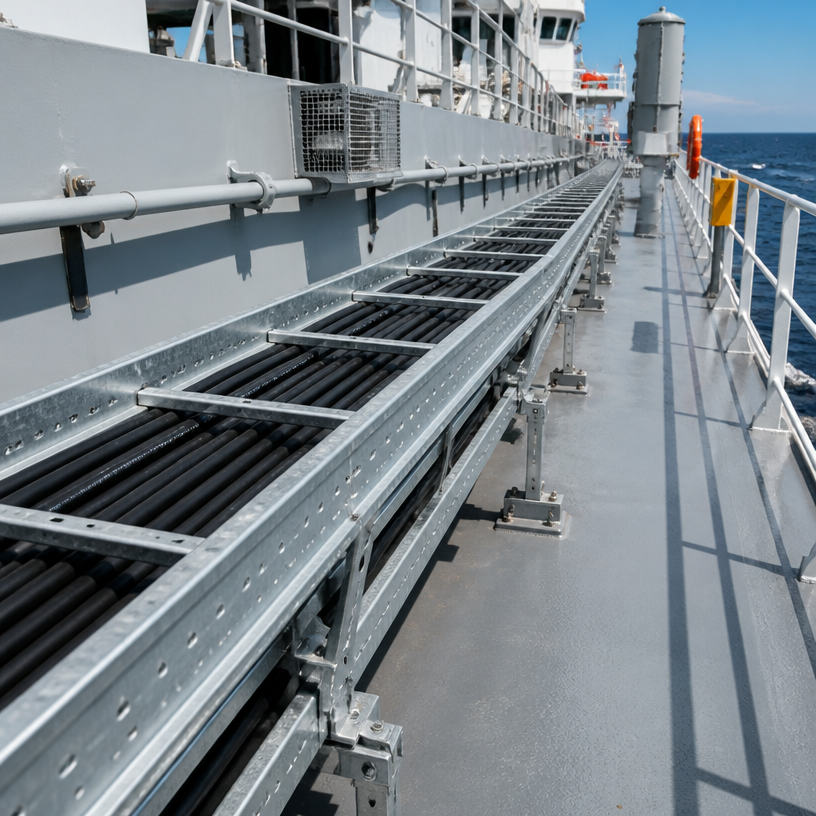
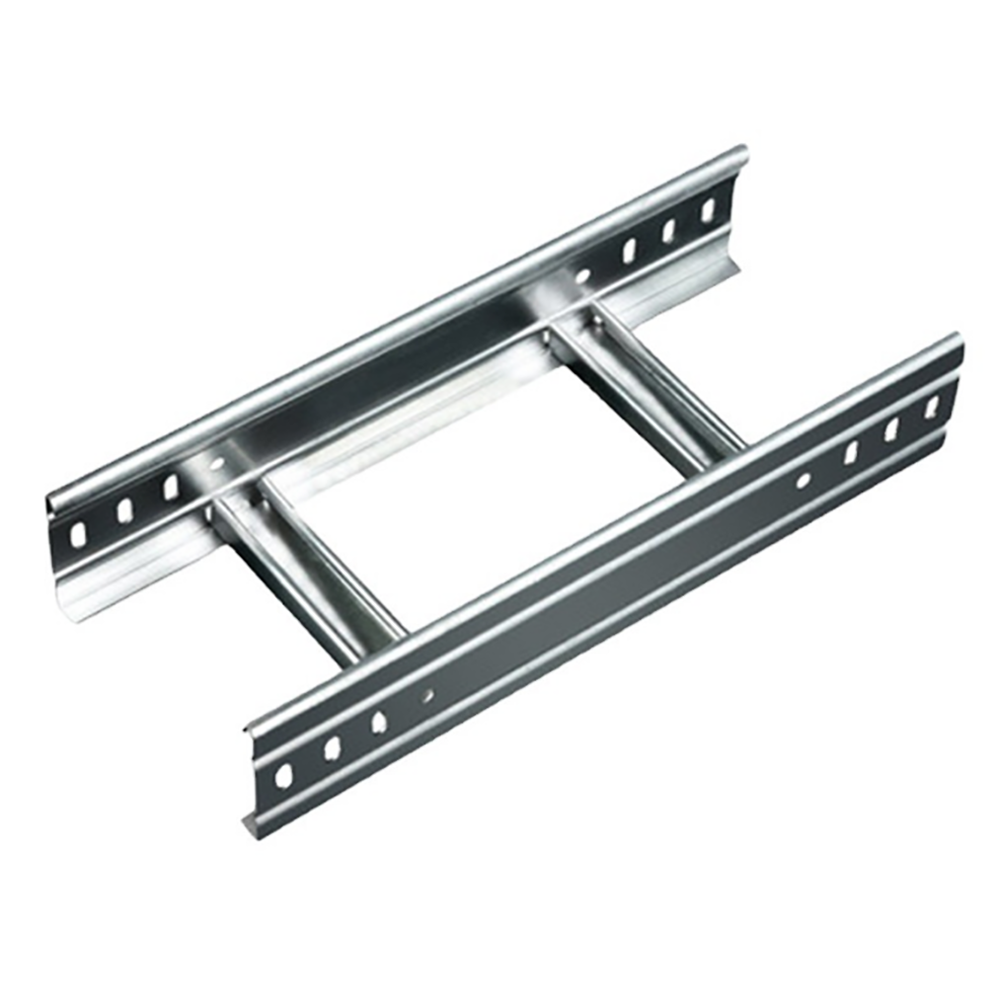
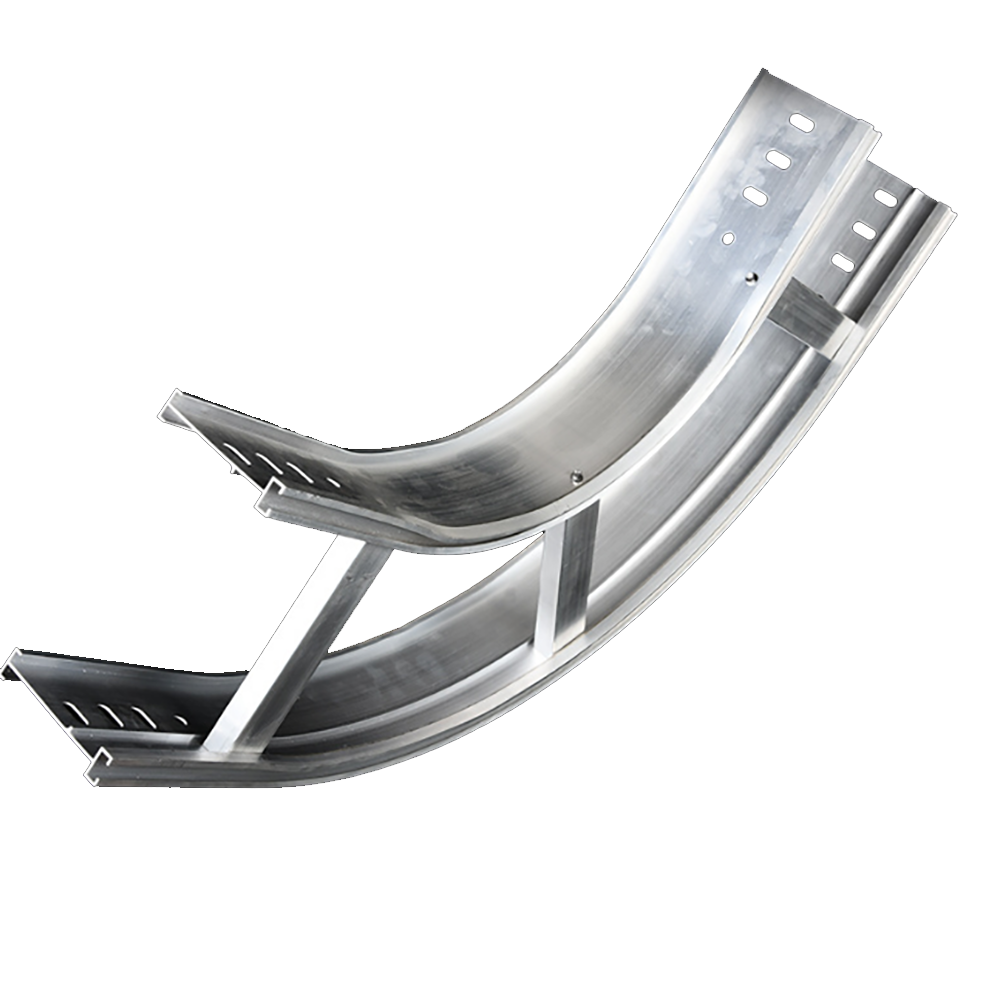
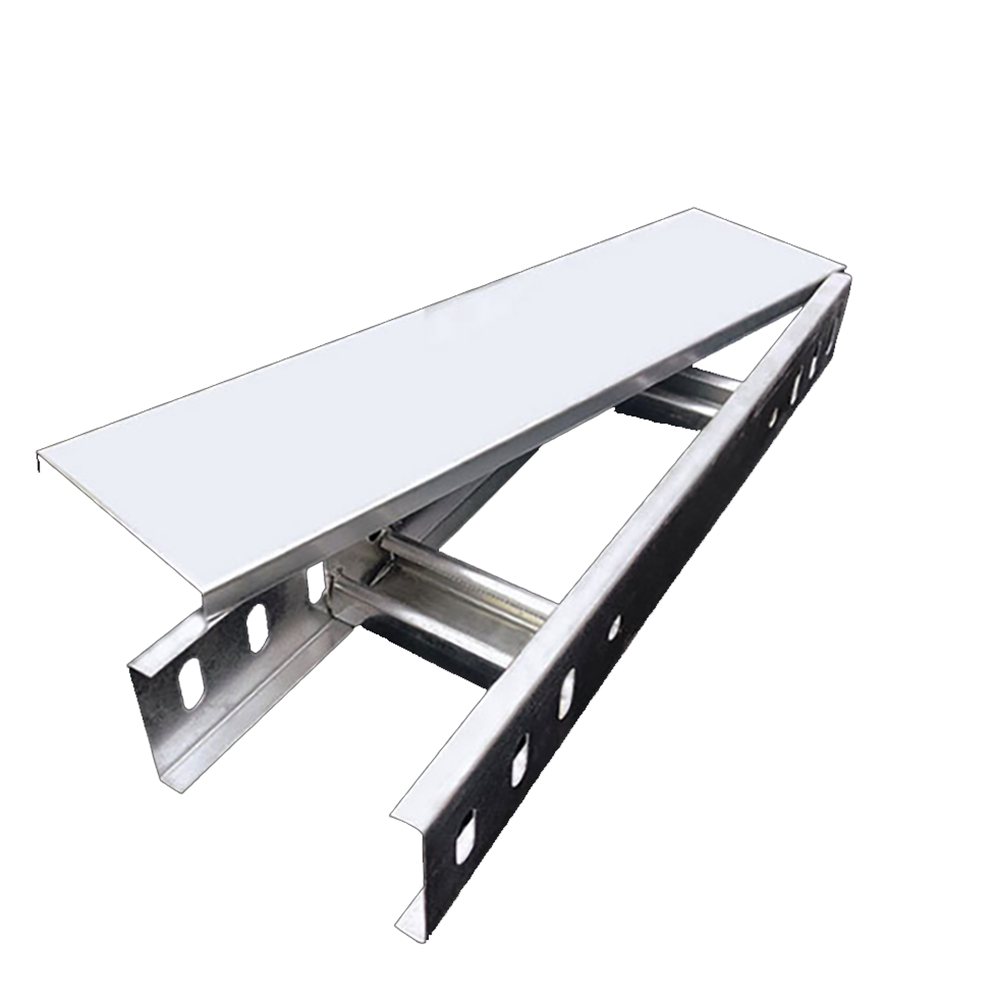
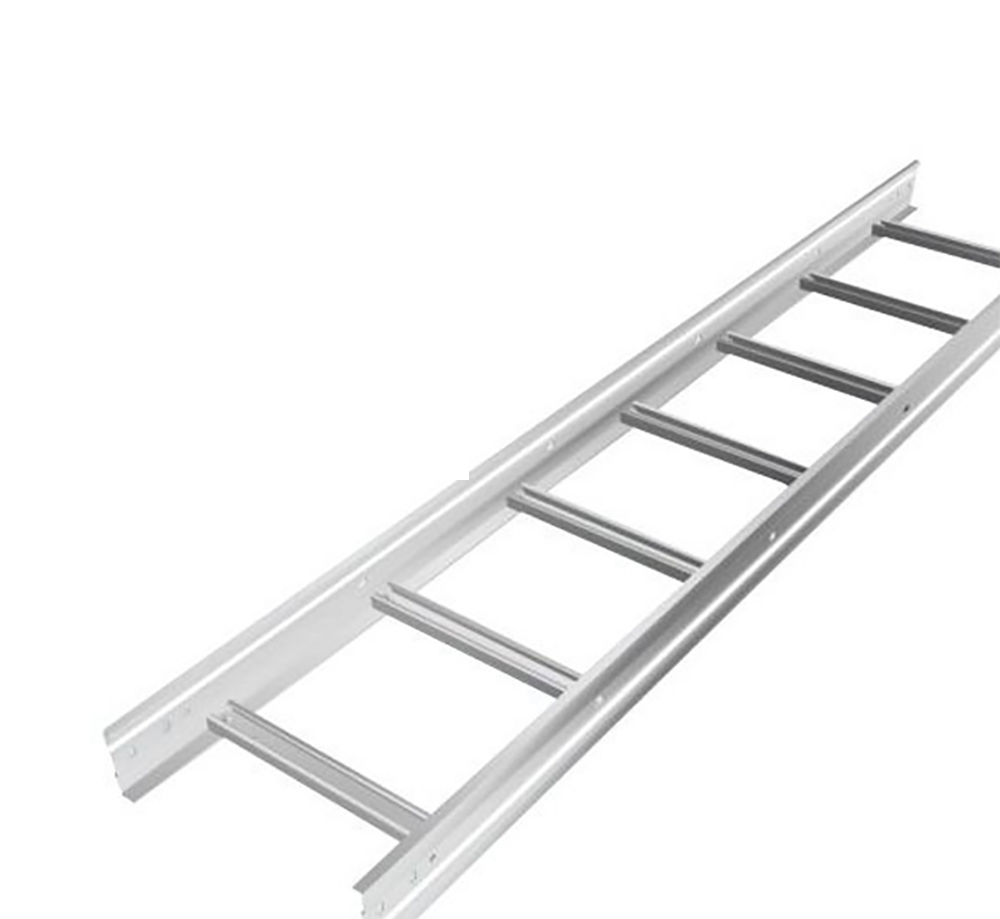
HDG Cable Ladder — ISO 1461 Hot-Dip Galvanized Cable Ladder for Coastal & Marine Service
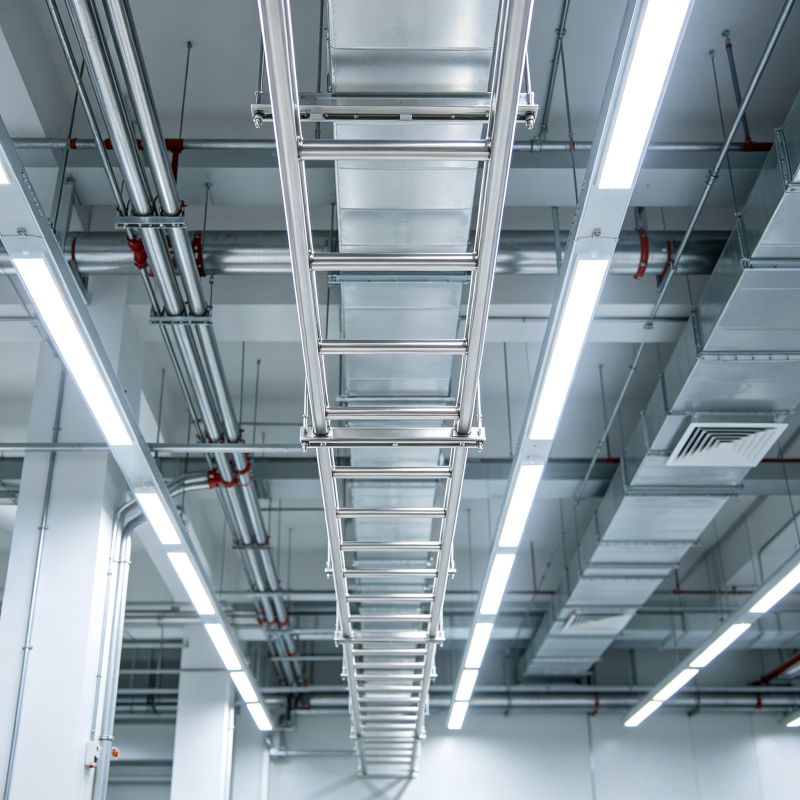
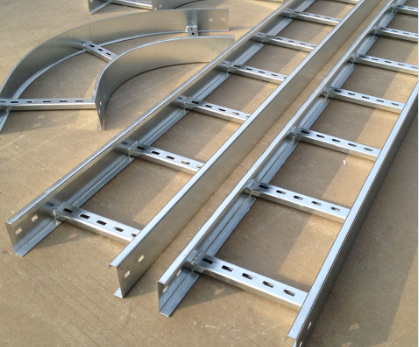
Qinkai HDG cable ladders are steel cable support structures protected by true hot-dip galvanizing to EN ISO 1461 — the most proven, cost-effective corrosion protection for coastal and marine atmospheric service. At ~450 °C, molten zinc metallurgically bonds to the steel, forming a layered coating of pure zinc and zinc-iron alloys that protects in two ways: as a barrier and as a sacrificial anode that self-heals scratches and cut edges.
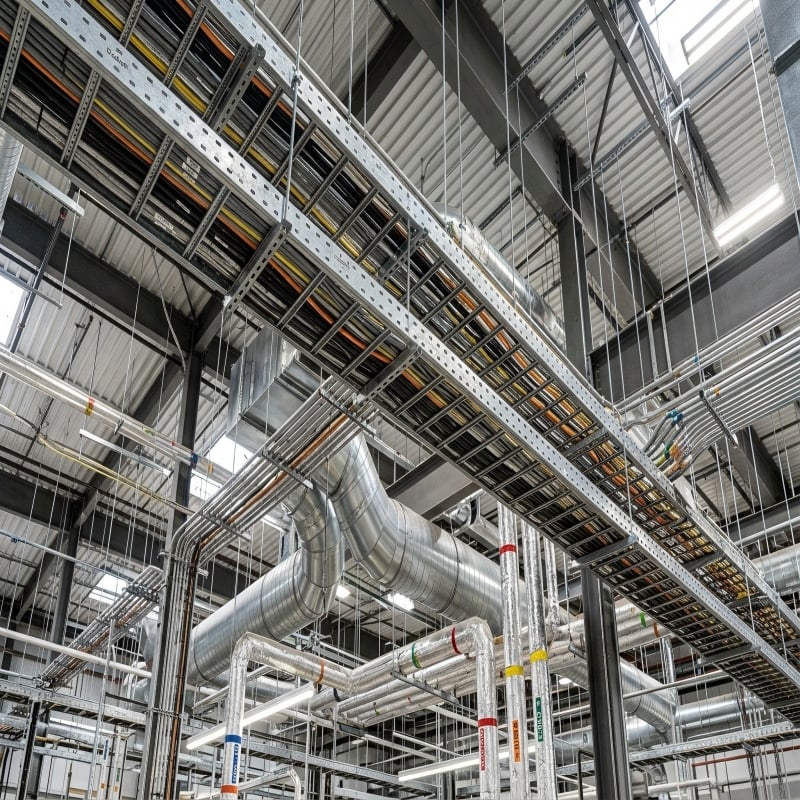
Available with rung spacing 250–300 mm, side rails 75–200 mm and widths up to 900 mm, our ladders carry NEMA-classified loads over spans up to 3.0 m. Zinc coating thickness is verified to ISO 1461 (70–85 µm+ on structural sections), with an expected first-maintenance life of 40–120 years in ISO 9223 C4–C5 coastal atmospheres. Complete with matching galvanized accessories — factory-direct with mill coating certificates.
- Technical Specifications
- Advantages
- Applications
- FAQ
- Recommended Products
Technical Specifications
General Specifications
| Parameter | Specification |
| Product Type | Ladder (trough / channel optional) |
| Material | Q235B carbon steel + hot-dip galvanizing (HDG) |
| Galvanizing Standard | EN ISO 1461 (~450 °C immersion) |
| Rung Spacing | 250 / 300 mm (customizable) |
| Side Rail Height | 75 / 100 / 150 / 200 mm |
| Standard Width | 100 – 900 mm |
| Standard Length | 3000 / 6000 mm |
| Standard | NEMA VE 1 / IEC 61537 |
| Load Class | NEMA Class 8C – 30C |
| Allowable Span | 1.5 – 3.0 m (depending on width and load) |
| Operating Temperature | -60 °C to +400 °C |
| Accessories | Connectors, covers, support brackets, grounding fittings (same galvanized finish) |
Material Core: The Hot-Dip Galvanized Coating System (why material matters)
| Item | Specification / Explanation |
| Coating structure | Outer pure zinc layer (η) + zinc-iron alloy layers (ζ/δ/Γ), metallurgically bonded — cannot peel off in transport or installation |
| Protection mechanism | Dual protection: physical barrier + cathodic protection (zinc sacrifices itself to protect the steel at scratches — self-healing) |
| Thickness comparison | Electro-galvanized 15–25 µm vs hot-dip galvanized 55–85 µm+ (3–4× thicker) |
| ISO 1461 minimum thickness | Steel <1.5 mm → 45 µm; 1.5–3 mm → 55 µm; 3–6 mm → 70 µm; ≥6 mm → 85 µm |
| Marine life (atmospheric zone) | ISO 9223 C5 zinc consumption 0.7–2.1 µm/year → 85 µm coating: 40–120 years to first maintenance |
| Documentation | Multi-point coating thickness report + mill material certificate shipped with every order |
Advantages
Six Core Advantages
| Advantage | Value Proposition |
| 1. Metallurgical-grade corrosion layer | 450 °C immersion forms zinc-iron alloy bonded to the steel base — no peeling in transport or installation |
| 2. Self-healing cathodic protection | At field cuts, scratches and drill holes, zinc sacrifices itself to protect the steel — cut edges never rust |
| 3. Long life in marine atmospheres | 40–120 years to first maintenance in ISO 9223 C5 coastal atmospheres — lowest lifecycle cost |
| 4. Unbeatable value | Far superior to electro-galvanizing or paint, at 1/3–1/2 the price of 316L stainless |
| 5. Verifiable code thickness | Strictly executed to ISO 1461; coating thickness report shipped with the goods — zero inspection disputes |
| 6. Fully galvanized package | Connectors, covers, brackets galvanized in the same batch — no bare steel on site |
Core Competitiveness (Why Qinkai)
Traceable coating — ISO 1461 multi-point thickness report + mill certificates shipped with every order. Overseas inspectors accept data, not promises.
Upgradeable thickness — standard execution to ISO 1461; 100 µm+ heavy coating available for high-corrosion coastal projects, matching C5 environments in a single order.
Engineering data package — NEMA load classification + load–span tables + assembly drawings, ready for EPC tender documents.
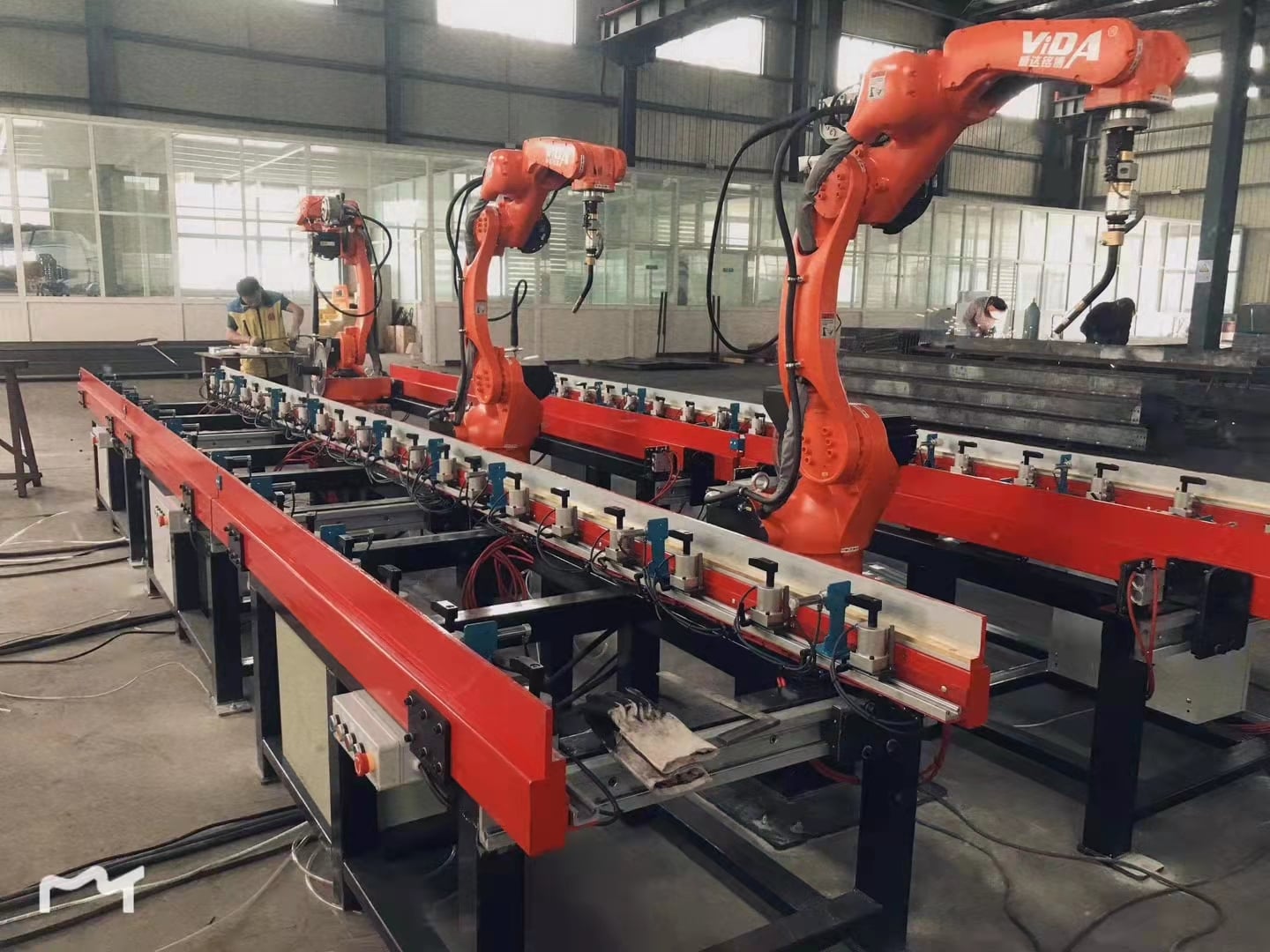
Factory-direct with in-house galvanizing line — own hot-dip line controls coating quality and lead time end-to-end.
Honest zone-based material advice — we recommend HDG for coastal atmospheric service (best value); for splash/submerged zones we say so plainly and point to 316L or FRP. EPC buyers select right the first time — no rework.
Applications
Marine & Offshore Applications
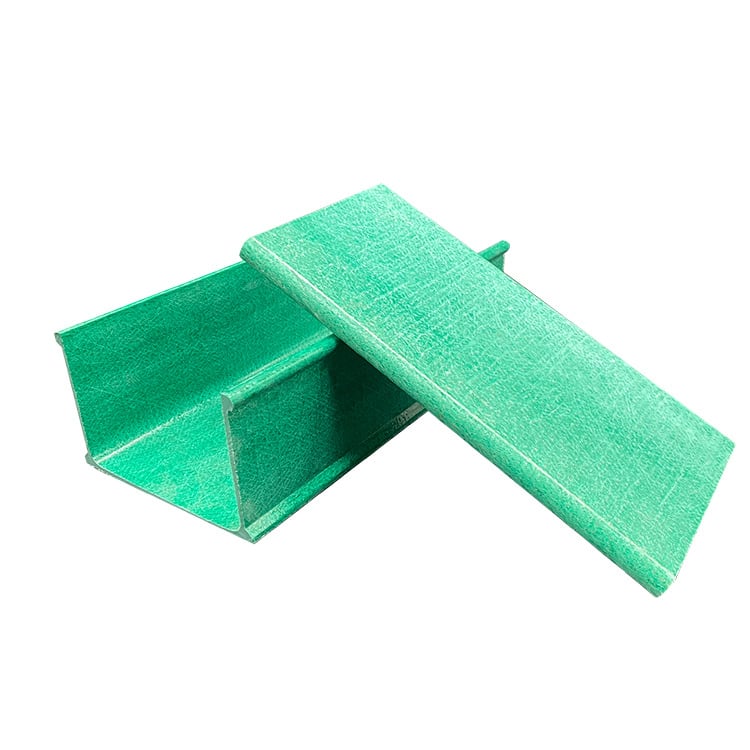
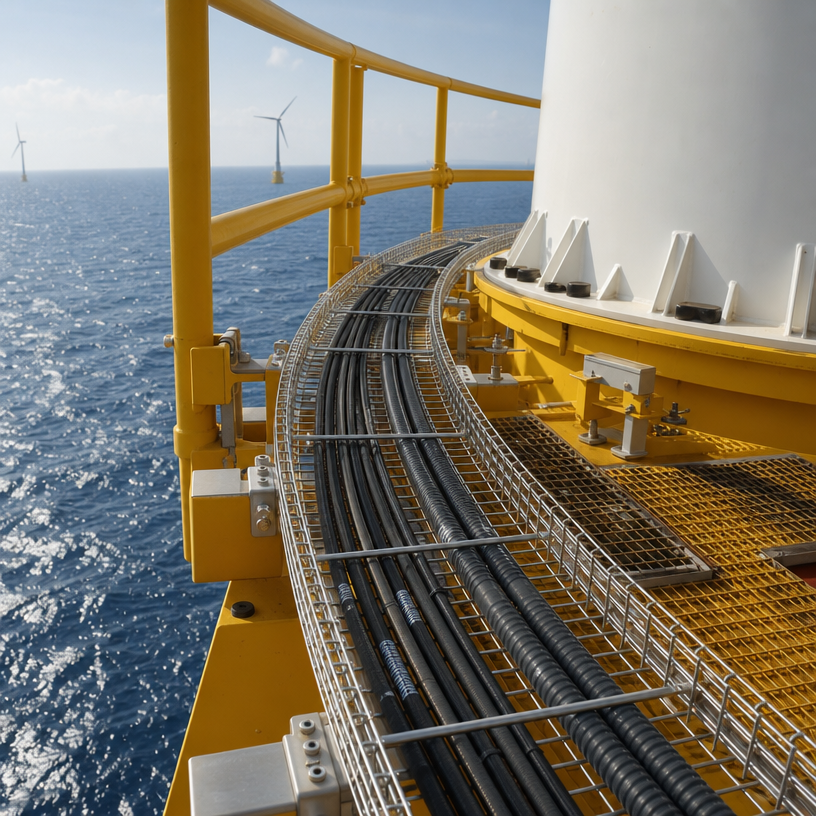
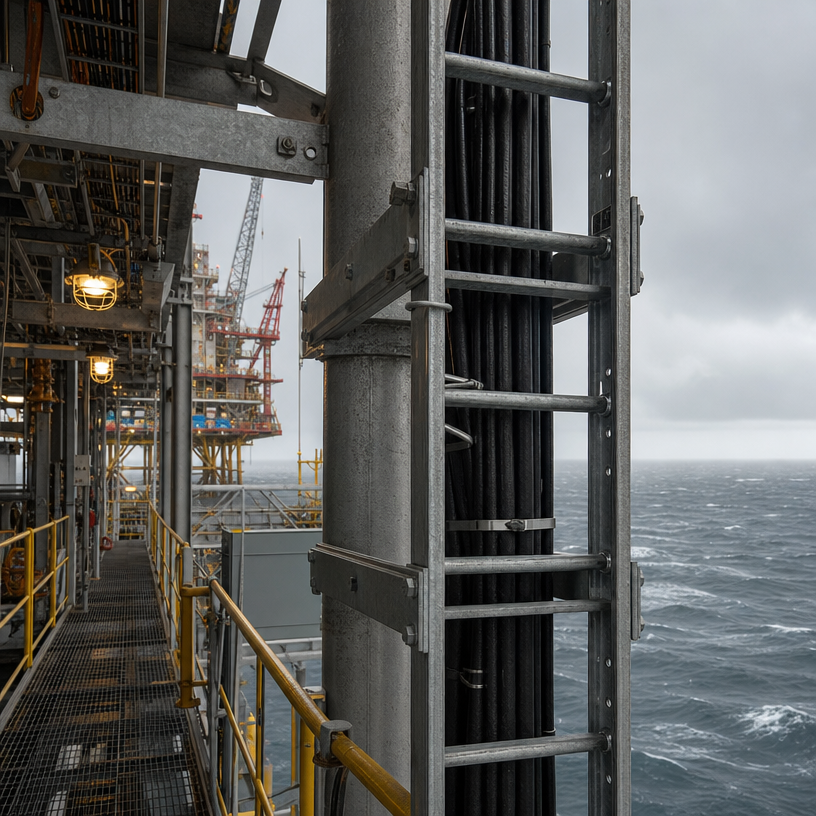
In marine engineering, material selection is zone-dependent. Hot-dip galvanizing excels — and is the most economical choice — in the coastal atmospheric zone (C4–C5, salt spray without direct water contact). In the splash zone, tidal zone and submerged zone, zinc consumption accelerates and 316L or FRP is the correct choice. Qinkai supplies all three product lines and recommends by environment — one selection, done right.
Zone-based material matrix:
| Marine Zone | Environment |
| Coastal Atmosphere | Salt spray, no direct seawater contact (C4–C5) |
| Splash Zone | Repeated wave impact, wet-dry cycling |
| Tidal Zone | Periodic immersion |
| Submerged | Continuous seawater immersion |
Typical applications:
| Application | Key Value |
| Coastal Power Stations | Circulating-water plant piping and cable routes above ground — 40+ years maintenance-free in salt-spray atmosphere |
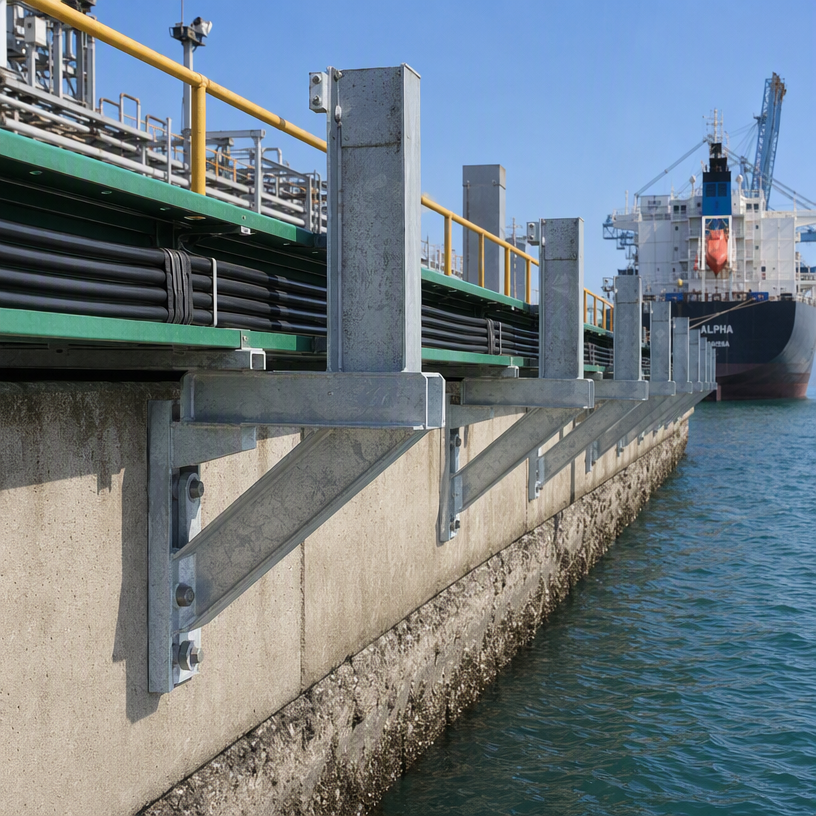
| Ports & Harbors | Equipment cables and shore-power systems in cargo areas; zinc layer withstands salt-spray washdown |
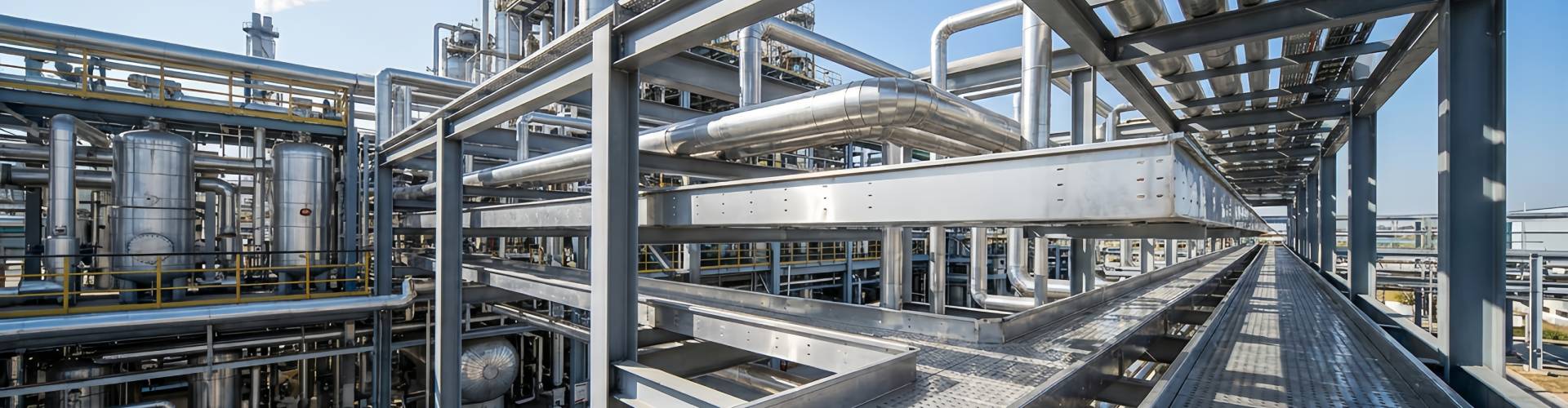
| Nearshore Industrial Facilities | Gas processing and petrochemical terminals — atmospheric-zone cable routes |
| Bridge Decks (above deck) | Bridge ancillary cables — ventilated, cool, easy to inspect |
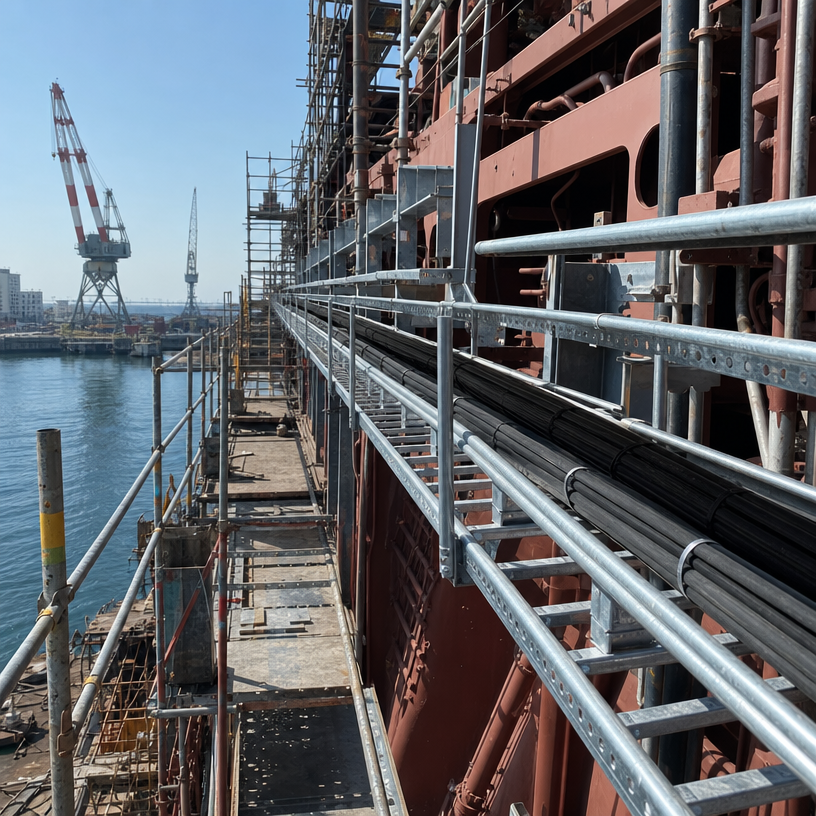
| Vessel Superstructures | Upper-deck cable routing — cost and corrosion balance |
| Coastal Data Centers | Power distribution cable ladders in high salt-spray atmospheres — economical and durable |
Application block copy: From coastal power stations to port-side process facilities, Qinkai HDG cable ladders deliver decades of salt-air service at the lowest total cost — with ISO 1461 coating certificates on every shipment, and honest zone-based material recommendations when the environment demands 316L or FRP instead.
FAQ
Q1: How thick is the coating? Which standard?
A1: Executed to EN ISO 1461 — 70–85 µm+ on structural sections; 100 µm+ upgrade available for coastal projects; multi-point thickness report shipped.
Q2: How long will it last in marine environments?
A2: 40–120 years to first maintenance in ISO 9223 C5 coastal atmospheres (based on zinc consumption of 0.7–2.1 µm/year).
Q3: Will field-cut edges rust?
A3: No — the zinc layer provides cathodic protection: at cut edges the zinc sacrifices itself to protect the steel. Self-healing.
Q4: How do I choose between HDG, 316L and FRP?
A4: Coastal atmospheric zone → HDG (best value); splash, tidal and submerged zones → 316L or FRP. We recommend by environment so you select right the first time.
Q5: Load capacity and span?
A5: NEMA Class 8C–30C, standard spans 1.5–3.0 m; load–span tables and assembly drawings supplied.
Q6: Can you customize width / rung spacing? MOQ?
A6: Yes — width, rung spacing and side rail height all customizable; quote within 24 h of your drawing, MOQ from 100 m per size.