
Comprehensive Guide to Metal Trunking Solutions

Get a Free Quote

Our representative will contact you soon.
Email
Mobile/WhatsApp
Name
Company Name
Message
0/1000

metal trunking

Metal trunking is an essential component in industrial  and commercial settings,  designed to protect and manage electrical  wires and cables. As a  system that facilitates efficient wiring, it plays a crucial role in maintaining safety and organization  within various environments.  Buyers often seek  reliable products that meet specific quality standards while considering  cost,  installation  ease, and potential  issues. This  article provides a  comprehensive  overview of  metal trunking,  addressing quality evaluation, cost  factors, installation guidance, common problems, and the advantages  of  metal trunking in industrial applications. For example, using a SS316 Wire Mesh Cable Tray can enhance cable management in harsh environments.


Cost Factors to Consider When Purchasing Metal Trunking

The pricing of metal trunking is influenced by several factors. Material selection plays a significant role; for instance, stainless steel trunking may come at  a higher cost  compared to standard galvanized options due  to its enhanced corrosion resistance.  Additionally,  the  complexity of the trunking design—such as custom shapes or sizes—can also affect overall pricing.

Another consideration is the order quantity.  Manufacturers  may offer tiered pricing, where purchasing  in bulk can lead to cost savings. Buyers  should also account for shipping and handling  fees, particularly  if the trunking will be transported internationally. It’s advisable to request  detailed quotations that outline all costs, including any potential tariffs for imported goods.

Finally, lead times can  impact costs. Products requiring  custom  manufacturing  may have longer lead times, which can affect project schedules. Understanding the balance between cost, quality, and  delivery timelines is  essential for making informed purchasing  decisions.
Installation Guidance for Efficient Metal Trunking Setup

To ensure a successful installation  of metal  trunking,  proper planning  and execution  are crucial. First, assess the installation environment to determine  the appropriate trunking size and type.  The layout should  accommodate the  number of cables being managed, with consideration for future expansions.

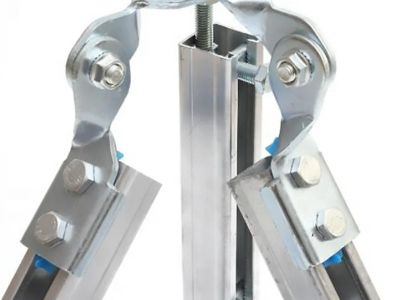
When installing  metal trunking,  it’s important to follow the manufacturer’s guidelines regarding spacing and fastening methods. Using appropriate mounting hardware, such as brackets and anchors, is essential for structural integrity. Additionally, ensuring that the trunking is level and securely attached  to walls or ceilings will prevent sagging or  damage over time.

During installation, allow for sufficient cable room within the trunking to facilitate easy access for maintenance or upgrades. Proper cable organization within the trunking not only enhances aesthetics but also minimizes the  risk  of overheating.  Lastly, conducting  a final inspection after  installation can help identify  any adjustments needed before the system is put into  operation.

Common Problems with Metal Trunking and Effective Solutions

Despite  its advantages, metal trunking can present several challenges. One common issue is corrosion,  particularly in environments with high  humidity or exposure to chemicals. To mitigate this, ensure that the trunking is  treated with a protective coating and  consider  using  stainless steel in corrosive environments.

Another  issue that may arise is insufficient capacity for the number of cables being  routed, which can lead to overheating. Buyers  should carefully evaluate the load  capacity and ensure that the  selected trunking can accommodate not only current needs but also future expansions.  

Improper installation can also  lead to problems such as misalignment or inadequate support. Therefore, it’s essential to  follow installation best practices  and regularly  inspect the trunking system for  signs of wear or  damage. Addressing these issues promptly can help maintain  system integrity and prolong the lifespan of the  installation.

The Advantages of Metal Trunking in Industrial Applications

Metal trunking  offers numerous advantages in industrial  applications, primarily due to its durability and strength. It provides excellent protection for electrical wiring against physical damage, dust, and moisture, making it suitable for a wide range of  environments, including factories, warehouses, and commercial buildings.


Another significant benefit is its fire resistance.  Metal trunking can contain potential hazards by preventing the spread of flames in  the event  of an electrical  fire, thereby enhancing overall safety. Additionally, the ability to customize metal trunking solutions enables manufacturers  to meet specific project requirements, including  size, shape, and  surface treatments.

Metal trunking systems are also  environmentally friendly, as they are often recyclable and can be manufactured with sustainable practices.  This not only helps reduce waste but also aligns  with the growing demand  for eco-conscious building practices in various industries.</p>

understanding the intricacies of metal trunking—from evaluating quality standards to recognizing common installation challenges—empowers B2B buyers to make informed purchasing decisions. By focusing on  these  essential  aspects, purchasing  managers, engineers, and other industry professionals can ensure they select the right metal trunking solutions for their specific needs.


Evaluating Quality Standards of Metal Trunking Products

When assessing the quality of metal trunking products, several  critical specifications should be  considered. Firstly, the material used is paramount; steel is commonly favored for its strength and durability, while aluminum  may offer a lighter alternative. Buyers should  look for trunking that complies with relevant industry standards and  certifications, which can indicate reliability and safety.

Moreover, the thickness  of the  metal is a significant factor  influencing its performance. A thicker trunking may provide better protection against impact and environmental factors, while also ensuring a longer lifespan. Buyers should also  evaluate the surface treatment  of  the  trunking, such  as  powder coating or  galvanization, which enhances corrosion resistance and improves aesthetic appearance. For instance, HDG Cable Ladder is an excellent choice for coastal environments.

Quality control  processes during manufacturing are essential. Buyers should inquire about the manufacturer’s quality  assurance practices, including inspections at various  production stages. This ensures dimensional accuracy and adherence to specifications,  reducing the risk of defects  and ensuring optimal performance in the field.

Frequently Asked Questions

What is metal trunking and its main use?

Metal trunking is a rigid metal channel used to route and protect electrical cables in industrial and commercial installations, offering durable support, organized routing, and mechanical protection for wiring systems.
Common materials include galvanized steel, stainless steel, and pre-painted sheet. Finishes offer corrosion resistance and can be specified for indoor or outdoor use to meet project requirements.
Yes. Our trunking is designed to work with C-channel supports, seismic bracing, and finished supports for secure mounting and seamless integration into existing cable management systems.
We offer custom lengths, widths, and stamped parts to match your layout. Accessories like bends, junctions, covers, and mounting brackets can be tailored to project specifications.
Products are manufactured under strict quality control with industry-standard fabrication and testing processes to ensure durability, dimensional accuracy, and compliance with electrical routing and mechanical support requirements.

Our Blog Posts

Complete Hardware Glossary: Solar Mounting, Pipe Supports and Cable Management Parts

21

Sep

Complete Hardware Glossary: Solar Mounting, Pipe Supports and Cable Management Parts

Understanding the components of solar mounting structures, pipe supports, and cable management parts is crucial for professionals in the manufacturing and construction industries. This complete hardware glossary will provide insights into evaluating ...
View More

Get a Free Quote

Our representative will contact you soon.
Email
Mobile/WhatsApp
Name
Company Name
Message
0/1000

Related product categories

Comprehensive Guide to Metal Trunking Solutions

Get a Free Quote

Our representative will contact you soon.
Email
Mobile/WhatsApp
Name
Company Name
Message
0/1000