
Galvanised Steel Trunking: Key Specifications & Applications

Get a Free Quote

Our representative will contact you soon.
Email
Mobile/WhatsApp
Name
Company Name
Message
0/1000

galvanised steel trunking

Galvanised  steel trunking  is an essential component for  managing and  protecting electrical cables and  wiring in various  industrial applications.  As a  B2B buyer, understanding  the specifications, sourcing options, cost factors, installation guidance, and applications of  galvanised  steel trunking is crucial for making informed  purchasing decisions. This article  will provide you with valuable  insights  to help you  navigate the complexities  of selecting the  right  trunking for  your needs.

Where to Source Reliable Suppliers for Galvanised Steel Trunking

Finding a trustworthy supplier  for galvanised steel trunking requires careful evaluation. Here are some strategies:

Industry Associations: Joining  industry associations  can provide access to a network of reputable  suppliers. These organizations often have directories or resources to  help locate qualified manufacturers.

Trade Shows and Expos: Attending industry trade  shows can  be an excellent  way  to meet suppliers in person.  You can inspect their products, ask questions, and build relationships that can lead to better pricing and service.

Online Marketplaces: Platforms such as Alibaba or Global Sources can connect you with manufacturers worldwide. It's vital  to check supplier ratings, reviews, and certifications to ensure reliability.

Direct Manufacturer Contact: Engaging directly with manufacturers, like Shanghai  Qinkai Industry Co., Ltd., can offer insights into their production capabilities and customization options. Discussing your specific needs can lead to tailored solutions. Additionally, considering a SS316 Cable Tray Bracket can enhance your installation's effectiveness.

Referrals and Recommendations: Seek recommendations from industry peers who have previously purchased galvanised steel trunking. Their experiences can guide you toward trustworthy suppliers.

By utilizing these sources, you can establish  a list of potential suppliers, ensuring you  find one that  meets your  quality  and reliability  expectations.
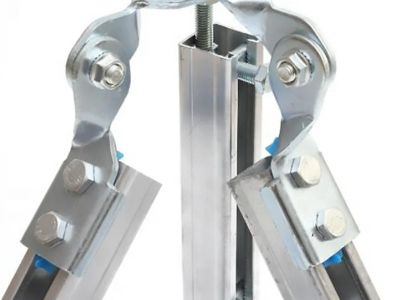
 

Cost Factors to Consider When Purchasing Galvanised Steel Trunking

Understanding  the cost factors associated with galvanised steel trunking is essential for budgeting. Consider the following elements:

Material and Manufacturing Costs: The price of raw materials, including steel and zinc  for  galvanisation, can fluctuate based on market  conditions. Ensure that  the  supplier provides transparent pricing based on current material costs.

Customization and Specifications: Custom dimensions or additional features, such as special  coatings or finishes, may increase costs. Clearly outline your requirements to receive accurate quotes.

Quantity: Many suppliers have minimum order quantities (MOQs) that can influence costs.  Purchasing  larger quantities  often leads  to price breaks, so assess your needs realistically.

Shipping and Handling:  Freight costs can significantly affect total expenditures, especially for  international shipments. Consider the logistics  involved and request shipping quotes from suppliers.

Lead Times: Longer lead times may result in increased costs if you require expedited shipping to meet project deadlines.  Discuss potential lead times with suppliers during the quoting process.


By  thoroughly evaluating these factors, you can  make  informed purchasing decisions that align with your budget and  operational needs.

Installation Guidance for Galvanised Steel Trunking Systems

Proper installation of galvanised steel trunking is critical to ensuring  its effectiveness and longevity. Here are key considerations for a successful installation:

Planning the Layout: Before installation, develop a clear layout plan that factors in cable paths, access points, and any potential obstacles.  This will help ensure that the trunking meets safety  and  operational  requirements.

Mounting: Ensure that the trunking is securely mounted using  appropriate brackets and  supports. The mounting method should accommodate the expected load  and environmental conditions, particularly in high-traffic or vibration-prone  areas.

Cable Management: Organize cables properly  within  the trunking  to prevent tangling or  damage. Utilize cable ties or clips for additional organization and safety.


Sealing and Weatherproofing: If the trunking will be exposed to outdoor  conditions, ensure that all joints and openings are properly sealed to prevent moisture ingress. This is crucial for maintaining the integrity  of the cables.

Safety Standards: Follow local electrical codes and safety regulations during installation. This may include grounding  requirements or fire  safety  standards that must be adhered to when installing trunking  systems.

By following these guidelines, you can ensure that the installation of galvanised steel trunking is efficient, safe, and compliant with industry standards.

Applications of Galvanised Steel Trunking in Industrial Settings

Galvanised steel trunking is versatile and widely used across various  industrial applications. Some  common uses include:

Electrical Distribution: In  manufacturing facilities, galvanised steel  trunking is often used to  protect  and manage electrical cables between distribution boards  and machinery. Its durability and corrosion resistance make it suitable for both indoor and outdoor applications.

Telecommunications: The trunking is  also used in telecommunications infrastructure, providing  a  secure pathway for communication cables. Its ability to withstand environmental factors ensures reliable performance.

Infrastructure Projects: In construction and civil engineering projects, galvanised steel trunking  can be  utilized for cable management in large buildings, bridges, and tunnels. Its strength and protection against corrosion are critical in these applications.

Renewable Energy: With the increasing  demand for solar power installations, galvanised  steel trunking is often  used to protect wires and cables associated with solar panels and battery systems. For optimal solar mounting, consider a Solar Mounting System designed for durability.

Heavy Machinery: Industries that rely on heavy machinery benefit  from galvanised  steel trunking due to its robust nature, safeguarding electrical  connections in harsh operating conditions.

Understanding these applications can help buyers recognize the value of galvanised steel trunking and its suitability for their specific needs. By  selecting the right trunking, you can enhance operational efficiency and ensure the safety of your electrical systems.

Key Specifications of Galvanised Steel Trunking You Should Know

When evaluating galvanised steel trunking, several  key specifications  should be considered:

Material: Galvanised steel is coated with a layer  of zinc to  enhance corrosion resistance. This is particularly important in environments prone to moisture or chemical exposure. Ensure that the galvanisation process meets industry standards for  durability and longevity.

Dimensions: Common sizes range from small trunking suitable for residential  applications to larger trunking designed for heavy  industrial use. Standard  widths and heights must align with the cable sizes and  quantities you intend to manage.

Thickness: The thickness of the steel  affects its strength and  load-bearing capacity. Buyers should  verify that  the thickness meets the requirements for the specific application.  For  example, thicker trunking may be necessary in environments  with high cable loads or potential impact.

Sealing and Accessibility: Consider whether the trunking features a removable cover for easy access to cables. This can facilitate maintenance and modifications, reducing downtime in operations.

Certifications: Look for certifications that indicate compliance with  industry  standards. This includes ISO certifications or specific electrical safety standards  relevant to your application.

Understanding these specifications  helps ensure that the chosen galvanised steel trunking will perform effectively in its intended environment.

Frequently Asked Questions

What is galvanised steel trunking used for?

Galvanised steel trunking protects and organizes electrical cables in industrial, commercial, and solar installations. It provides mechanical protection, neat routing, and corrosion resistance for long-term cable management.
We offer multiple widths, depths, and profiles to suit cable loads and routes, compatible with our cable trays, C-channel supports, and mounting systems. Custom sizes can be manufactured on request.
The hot-dip galvanised finish delivers strong corrosion resistance for indoor and outdoor use. Durability depends on environment; we can recommend thicker coatings or alternative finishes for harsh conditions.
Yes. Our trunking is designed to integrate with C-channel supports, seismic bracing, and solar mounting structures for seamless installation and structural compatibility.
Yes. We supply finished supports and a full range of stamping services, including cut-to-length, holes, and custom fabrication to meet project specifications.

Our Blog Posts

Complete Hardware Glossary: Solar Mounting, Pipe Supports and Cable Management Parts

21

Sep

Complete Hardware Glossary: Solar Mounting, Pipe Supports and Cable Management Parts

Understanding the components of solar mounting structures, pipe supports, and cable management parts is crucial for professionals in the manufacturing and construction industries. This complete hardware glossary will provide insights into evaluating ...
View More

Get a Free Quote

Our representative will contact you soon.
Email
Mobile/WhatsApp
Name
Company Name
Message
0/1000

Related product categories

Galvanised Steel Trunking: Key Specifications & Applications

Get a Free Quote

Our representative will contact you soon.
Email
Mobile/WhatsApp
Name
Company Name
Message
0/1000