
Choosing the Right Perforated FRP Cable Tray

Get a Free Quote

Our representative will contact you soon.
Email
Mobile/WhatsApp
Name
Company Name
Message
0/1000

perforated frp cable tray

Perforated  FRP (Fiberglass  Reinforced Plastic) cable trays are essential  components in various industrial applications, providing a lightweight, corrosion-resistant, and durable  solution for cable management.  Buyers often have concerns  about the  specifications, installation processes, and common  issues  associated with  these products. This article aims  to guide  you through  selecting  the  right  perforated  FRP cable tray, outlining key  specifications,  installation tips, potential  problems, and a range of applications across different industries.

Key Specifications to Consider for Perforated FRP Cable Trays

Understanding key specifications  is essential in making an informed purchase. Here are the  primary specifications to  evaluate:

Material Composition: The fiberglass resin used  in the construction affects  the  tray’s strength and corrosion resistance. Verify that  the  selected material meets your project's environmental requirements.  Dimensions: Width, height, and length of  the tray should correspond to  the space available and the volume of cables to be managed. Standard sizes are available,  but custom dimensions can often be accommodated. Load Rating: This  specification indicates the maximum weight the tray can safely  support. Make sure to choose a load rating that exceeds  the expected weight of the cables. Perforation Size and  Pattern: The holes in the tray facilitate airflow and drainage. The size and distribution of these perforations should be suited to the specific application to prevent dust accumulation  while  supporting cable cooling. 

Discuss these specifications with your supplier to ensure compatibility with your project requirements.
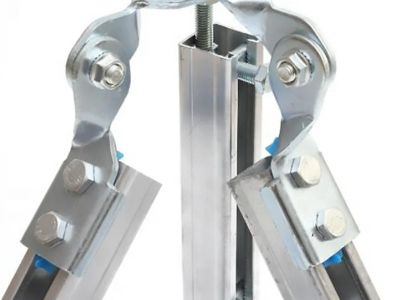

 

Installation Tips for Perforated FRP Cable Trays in Industrial Settings

Proper installation of perforated FRP cable  trays is critical for optimal performance. Here are some practical tips:

Site Preparation: Ensure  the installation  site is clean and free  from debris. The installation surface  should be sturdy enough  to support the weight of the tray  and cables. Support Spacing: Follow manufacturer  guidelines  for support spacing, which can vary based on the load capacity and dimensions  of the tray. Typically, support brackets should be spaced  at intervals that prevent sagging. Use Proper Fasteners: When securing the  trays, use non-corrosive fasteners compatible  with FRP materials to avoid degradation over  time. Stainless steel or plastic fasteners  are commonly recommended. Cable Management: Organize cables within the tray to prevent tangling and damage. Use cable ties or  clamps to secure the  cables  at appropriate  intervals.

Proper installation can  significantly reduce maintenance needs and extend the life of the tray.

Common Problems with Perforated FRP Cable Trays and Their Solutions

Even  with proper selection and  installation, issues  can arise  with perforated FRP cable trays. Here are some common problems and their solutions: 

Cracking or Fracturing: This can occur due to excessive  loading or improper installation. To avoid this, ensure  that the load rating  is not exceeded  and that installation guidelines are strictly followed.  Corrosion: Although FRP is  resistant to many chemicals,  some harsh  environments can lead to surface degradation. Regular inspections can help identify early signs of wear, and choosing the right resin type can enhance resistance. Inadequate  Cable Support: If cables sag or  are not adequately supported,  this can lead  to damage. Ensure  that all  cables are secured and that the tray  is installed with the correct  support spacing.

By addressing these issues proactively, you can maintain the integrity and functionality of your cable management system.

Applications of Perforated FRP Cable Trays in Various Industries

Perforated  FRP  cable  trays are versatile and can be used in numerous industries. Here are some notable  applications: 

Chemical Processing: Their corrosion resistance makes  them ideal for  environments that involve exposure to hazardous materials. Water Treatment Plants: The lightweight nature of FRP trays facilitates easy installation and maintenance in wet environments.  Renewable Energy: In solar  energy applications, these trays  can support cabling  while withstanding outdoor conditions.  You may also want to consider a Solar Mounting System for enhanced performance in renewable projects. Manufacturing Facilities:  FRP trays are frequently used in factories for their durability and ease of installation,  especially  in areas with high humidity or chemical  exposure.

Understanding  the specific requirements of your industry  will aid in  selecting the most appropriate perforated FRP cable trays, ensuring a reliable and  efficient cable management solution.

By considering the factors outlined, buyers can make  informed decisions about perforated FRP cable trays that meet their project needs, leading to successful installations and long-term performance.

Choosing the Right Perforated FRP Cable Tray for Your Project Needs

When selecting a perforated FRP cable  tray, it’s crucial to  consider factors such as load capacity, environmental conditions, and installation requirements. The load capacity should align with the  weight of the cables being  supported; exceeding this can lead to  structural failure. Additionally, the environment plays a significant role in material  selection. For instance, if  the trays will be exposed to harsh  chemicals or extreme temperatures, choosing a high-quality FRP  material  designed to withstand such  conditions is vital. You might also want to explore solutions like Marine-Grade FRP Cable Tray for specific project needs.

Customization options are also  important.  Manufacturers  like Shanghai Qinkai Industry Co., Ltd. can provide tailored  solutions  that fit specific project requirements,  including unique dimensions  or  additional features such as integrated cable supports. Ensure that you  communicate your project needs clearly when requesting a quotation.

Frequently Asked Questions

What is a perforated FRP cable tray?

A perforated FRP cable tray is a fiber-reinforced polyester tray with pre-punched holes for ventilation, drainage and cable tie attachment. It supports and organizes power and communication cables in industrial and commercial installations.
FRP trays are lightweight, corrosion-resistant, non-conductive and have high strength-to-weight ratio. They resist chemicals and moisture, reducing maintenance in harsh or outdoor environments compared with metallic trays.
We offer various widths, depths and thicknesses with load ratings based on tray profile and span. Specific dimensions and capacities are provided on request so we can match your project requirements.
Yes. Perforated FRP trays are suitable for seismic support and outdoor solar installations due to corrosion resistance and compatibility with support systems, including our C-channel and finished support products.
Yes. We manufacture custom lengths, cutouts and stamped parts, and supply accessories such as splice plates, brackets and fasteners to integrate trays with support systems and seismic bracing.

Our Blog Posts

Complete Hardware Glossary: Solar Mounting, Pipe Supports and Cable Management Parts

21

Sep

Complete Hardware Glossary: Solar Mounting, Pipe Supports and Cable Management Parts

Understanding the components of solar mounting structures, pipe supports, and cable management parts is crucial for professionals in the manufacturing and construction industries. This complete hardware glossary will provide insights into evaluating ...
View More

Get a Free Quote

Our representative will contact you soon.
Email
Mobile/WhatsApp
Name
Company Name
Message
0/1000

Related product categories

Choosing the Right Perforated FRP Cable Tray

Get a Free Quote

Our representative will contact you soon.
Email
Mobile/WhatsApp
Name
Company Name
Message
0/1000