
Choosing the Right Wire Mesh Cable Tray Support

Get a Free Quote

Our representative will contact you soon.
Email
Mobile/WhatsApp
Name
Company Name
Message
0/1000

wire mesh cable tray support

Wire  mesh cable tray supports  are essential components used  in  various industrial and commercial applications to manage and support electrical wiring  and  cables. They offer a versatile  solution for organizing  cables, ensuring safety, and facilitating  maintenance. When selecting wire mesh cable tray supports, buyers often  have  concerns regarding durability, compatibility with existing systems,  and  cost-effectiveness. This  article  aims to provide insights into choosing the right  wire mesh cable tray  support, identifying reliable suppliers,  understanding specifications, evaluating cost factors, and addressing common problems associated with  these supports.

Reliable Suppliers for Wire Mesh Cable Trays

Finding a reliable supplier for  wire mesh cable trays and supports is essential for  ensuring product quality and timely delivery. Start by researching manufacturers with  a  proven  track record of reliability and  quality control. Look for suppliers  who have established certifications, a diverse product range,  and the ability to  handle custom  orders.

Engaging  directly with suppliers like Shanghai Qinkai Industry Co.,  Ltd.  allows you to discuss your project  needs, ask questions about manufacturing processes, and  request samples. A reputable supplier should be transparent about their production  capabilities,  lead times,  and pricing structures. Additionally, consider the supplier's  export experience and market reach,  as these factors often indicate their reliability in fulfilling international orders.
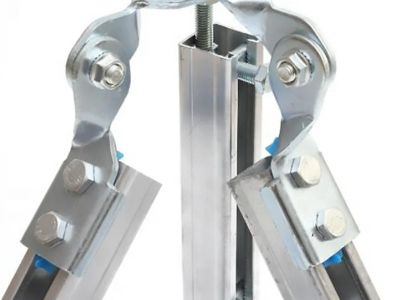
Understanding Specifications for Wire Mesh Cable Tray Supports

When evaluating wire mesh cable  tray supports, understanding the specifications is crucial for selecting the right product. Key specifications include:


Material: The choice of  material impacts durability and performance. Common materials include  mild steel, stainless steel, and  aluminum,  each offering different levels of corrosion  resistance and strength.

Gauge and Spacing:  The wire gauge determines  the  strength of the  tray, while  the spacing between supports affects load  distribution and stability. Ensure that the gauge selected aligns with your load requirements.

Finish Treatment: Surface treatments, such as galvanization or powder coating, enhance corrosion resistance and longevity, especially in harsh environments.

Load Ratings:  Verify that the load ratings provided by the manufacturer align with  your  project's requirements. Exceeding  these ratings  can lead to failures, compromising safety and performance. For projects requiring robust solutions, consider our HDG Cable Ladder.

Buyers should confirm these specifications with manufacturers to ensure that the products meet their specific application needs and  to avoid potential  issues during installation.

Cost Factors to Consider When Purchasing Wire Mesh Cable Trays

The  cost of wire mesh cable trays and supports can vary significantly based on several factors. Understanding these factors can help buyers optimize their purchasing decisions. 

Material Costs:  The material type  directly affects the price.  Stainless steel, for instance,  may be more expensive than galvanized steel but offers superior corrosion resistance.

Customization: Customized solutions often incur additional costs. If your project requires specific dimensions or features, prepare for  higher prices compared to standard products.

Volume  Discounts: Larger orders  typically qualify  for bulk pricing. Buyers should assess  their project needs carefully and consider ordering in bulk when feasible.

Shipping and Handling: Transportation costs can impact the overall  price, especially for international  shipments. It’s vital to discuss shipping options and  costs with suppliers upfront.


Installation Costs: Don’t overlook installation  costs. A design that simplifies installation  can lead to savings in labor costs.

By  evaluating these cost factors, buyers can make informed  decisions  that align with their budgets while ensuring the quality and effectiveness of their wire mesh cable tray supports.

Common Problems with Wire Mesh Cable Tray Supports and Solutions

While wire mesh cable tray  supports are generally reliable, common issues can arise that may affect performance. Being aware of these issues and their solutions can enhance operational efficiency:

Corrosion: In environments with  high humidity or exposure  to chemicals, corrosion can  compromise support integrity. To mitigate this, choose supports with appropriate  surface treatments, such as galvanization or stainless-steel options.

Load Failure: Overloading  supports beyond  their rated capacity can lead to structural failure. Ensure that load ratings are validated  against actual cable weights and configurations.

Improper  Installation: Incorrect installation can cause misalignments  or instability. Always follow manufacturer guidelines for installation and consider engaging experienced professionals for complex installations.

Maintenance Neglect: Regular inspections are essential to identify wear and tear. Establish a maintenance schedule to check for signs of corrosion or  structural issues, ensuring longevity and safety.

By recognizing these  potential problems and implementing proactive measures, buyers can maintain the  integrity of their wire mesh cable tray  supports and avoid costly disruptions in their operations. 

Through careful consideration  of product specifications, supplier reliability, cost factors, and common issues, buyers can confidently select the right wire mesh cable tray  supports for their projects. Engaging with experienced manufacturers like Shanghai Qinkai Industry  Co., Ltd.  will further enhance the purchasing experience, ensuring that all specific needs are met effectively.

Choosing the Right Wire Mesh Cable Tray Support for Your Projects

Selecting the appropriate  wire mesh cable tray support is critical  for ensuring the safety and efficiency of your installation. Consider factors  such as  load capacity, material, and environmental  conditions.  Load capacity refers to the maximum weight the  support can bear, which is influenced by the  gauge  of the  wire and the spacing of the support. For environments exposed to moisture or chemicals, corrosion-resistant materials like galvanized steel or stainless steel may  be  preferable, such as those found in our SS316 Wire Mesh Cable Tray.

Additionally, consider the dimensions of the support, including its  width, height, and length, to ensure compatibility with  your cable trays and installation space. A  well-designed support allows for easy  installation and accessibility for maintenance, which can save time  and costs in the long run. Collaboration with experienced manufacturers like Shanghai Qinkai Industry Co., Ltd. can help ensure that  your selected supports meet your  project's specific requirements.


Frequently Asked Questions

What is a wire mesh cable tray support?

A wire mesh cable tray support is a structural component that holds and secures wire mesh cable trays, providing routing, ventilation, and load-bearing for electrical and data cables in industrial and commercial installations.
Supports are typically made from carbon steel, stainless steel, or galvanized steel to ensure strength, corrosion resistance, and long service life for indoor and outdoor applications.
Load capacity varies by model and span; we provide specifications for light to heavy-duty supports and can recommend products based on tray size, cable weight, and span requirements.
Yes. We offer customization in dimensions, mounting styles, finishes, and stamped accessories to meet site-specific requirements including seismic bracing and solar mounting integration.
Contact our sales team with project details, drawings, and required quantities. We provide quotes, technical guidance, and manufacturing lead times for cable trays, supports, and related accessories.

Our Blog Posts

Complete Hardware Glossary: Solar Mounting, Pipe Supports and Cable Management Parts

21

Sep

Complete Hardware Glossary: Solar Mounting, Pipe Supports and Cable Management Parts

Understanding the components of solar mounting structures, pipe supports, and cable management parts is crucial for professionals in the manufacturing and construction industries. This complete hardware glossary will provide insights into evaluating ...
View More

Get a Free Quote

Our representative will contact you soon.
Email
Mobile/WhatsApp
Name
Company Name
Message
0/1000

Related product categories

Choosing the Right Wire Mesh Cable Tray Support

Get a Free Quote

Our representative will contact you soon.
Email
Mobile/WhatsApp
Name
Company Name
Message
0/1000