
Choosing Reliable Solar Panel Support Structures

Get a Free Quote

Our representative will contact you soon.
Email
Mobile/WhatsApp
Name
Company Name
Message
0/1000

solar panel support

Solar panel support  structures are essential components in the installation  of photovoltaic systems,  providing  the necessary stability and orientation for solar panels.  For B2B buyers,  including purchasing managers and engineers, selecting the right solar  panel support  is crucial to ensure the  system's efficiency, safety, and longevity. This  article will guide  you through key considerations,  including  how to choose the right support,  evaluate  suppliers, understand essential specifications,  compare  materials,  and  address common problems.


Evaluating Supplier Reliability for Solar Panel Support Systems

When choosing a  supplier for solar panel  supports, reliability is paramount. Start by reviewing the supplier’s experience in the  solar  industry. A reputable manufacturer,  such as Shanghai Qinkai Industry Co., Ltd., should have a  proven track record in producing durable support systems. Look for customer testimonials and case  studies that illustrate their capabilities in meeting diverse project needs.

Check the supplier’s certifications and quality  control processes. Certifications such as ISO 9001 can indicate a  commitment  to quality management practices, while compliance with local and international standards  ensures that the products  meet safety and performance criteria. A supplier’s willingness  to provide detailed documentation, such as test results and  material specifications, can also enhance trust.

Another essential factor is  the supplier's production capacity and lead  times. Ensure they can  meet your project timelines without compromising quality. Inquire about their ability to customize products based on project specifications and  their  responsiveness  to inquiries.
Key Specifications for High-Quality Solar Panel Support Structures

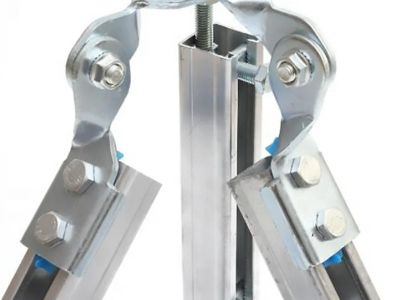
High-quality solar panel supports are defined by several key specifications that directly impact their performance and durability. These  include:

Material: Common materials include  aluminum, steel,  and galvanized steel. Each offers different benefits in terms of weight, strength, and corrosion resistance. For instance, aluminum is lightweight  and rust-resistant but may not handle heavy loads  as well as steel.

Load Capacity: This specification indicates the maximum weight the support can handle without failure. It’s crucial  to choose a support system that exceeds the combined weight of the solar panels  and any additional equipment.

Dimensions:  The height, width, and depth of the supports must align with the panel size and installation  requirements. Proper dimensions  ensure stability  and prevent structural failure.

Seismic  and Wind Ratings: Depending  on the geographical location, supports should be rated  for specific wind loads and seismic activity. These ratings provide assurance that the structure will withstand environmental stresses.

Finish and Coating: Protective coatings can enhance durability  and resistance to environmental factors. For example, powder-coated finishes can  provide better resistance to UV exposure and corrosion.

Evaluating these specifications  thoroughly will help  you  select a support system that  meets your performance expectations while ensuring safety and longevity.

Comparing Material Advantages in Solar Panel Support Designs

The choice of material for solar panel supports  can significantly affect the  overall performance and cost-effectiveness  of the installation. Here’s a breakdown of  the most commonly used materials:

Aluminum: Lightweight and resistant  to corrosion,  aluminum is easy to install and transport. It is ideal for residential applications but  may require additional support for larger commercial installations due to its lower load-bearing  capacity.

Galvanized Steel: Known for its strength  and durability, galvanized steel is often used in large-scale installations  where  high wind loads  are a concern. Its corrosion resistance  can  be enhanced further with additional coatings, making it suitable for rugged environments.

Stainless Steel: While more expensive, stainless steel offers  superior corrosion resistance and  a longer lifespan. It is ideal for coastal areas or installations exposed to harsh chemicals.

Composite  Materials: Emerging materials such as fiberglass and polymers offer benefits like lightweight design and corrosion  resistance. However, they may not be as widely available or tested in large-scale applications.

When selecting a material, consider factors such as cost, installation environment, and expected lifespan. Discussing these considerations with your supplier can  lead to more informed  decisions tailored to your project needs.

Common Problems with Solar Panel Supports and Their Solutions

When installing solar panel support systems, several common issues may arise, affecting both performance and safety. Here are some problems and their solutions:

Corrosion: This is a frequent issue, especially in coastal areas or environments with high humidity. To  combat this, select supports  made from corrosion-resistant materials  or those with protective coatings. Regular inspections can also help identify early signs of wear.

Incorrect Installation: Poor installation can lead to structural failures. Ensure that installation guidelines are followed closely. Using qualified personnel and conducting pre-installation  checks can  mitigate this risk.

Inadequate  Load Capacity: If the  support system cannot  handle  the weight of the solar panels plus additional equipment, it may fail. Always verify load  ratings and consider potential  future expansions when selecting  supports.

Movement or Shifting: Supports may shift over  time due to ground settling or seismic activity. Utilizing  seismic bracing systems or anchoring solutions can provide added stability. Consider using a Seismic Support System for enhanced stability.

By proactively addressing these common issues, buyers can ensure that their solar panel support systems function effectively and safely over their intended lifespan.

By understanding these essential aspects  of solar panel supports, B2B buyers can make  informed decisions  that align with their specific project requirements. The right support structure not only enhances the efficiency of  solar installations  but also ensures longevity  and reliability.

How to Choose the Right Solar Panel Support for Your Project

When selecting solar  panel supports, begin  by assessing your project  requirements. Consider factors such as the type  of solar panels you  are using, the installation environment (rooftop or ground-mounted), and local weather conditions, including wind loads and seismic activity.


The support structure  must be compatible with the panel dimensions and weight. For example, larger panels may require more robust  supports, while lighter panels might  be placed on lighter-duty structures.  Additionally, evaluate the installation angle needed for optimal sunlight  exposure throughout the year. Customization options, such as adjustable angles or modular designs, can  provide added flexibility to accommodate different setups.

Finally,  understanding the anticipated lifespan  and  maintenance requirements of your  supports is vital. Structures that require  minimal maintenance or are corrosion-resistant may  offer better long-term value, especially  in harsh  environments. For instance, choosing a support made from SS316 Wire Mesh Cable Tray can enhance durability against corrosion.

Frequently Asked Questions

What types of solar panel supports do you offer?

We supply C-channel supports, finished supports, seismic bracing systems, and complete solar mounting structures with related accessories for rooftop and ground-mount installations.
Yes. We design and manufacture seismic bracing systems and reinforced supports to meet regional seismic requirements and enhance system stability.
Supports are made from high-quality steel with options for hot-dip galvanizing, powder coating, or plain steel per project specifications and corrosion protection needs.
Yes. We offer custom support designs and a full range of stamping parts to match site-specific dimensions, load requirements, and installation preferences.
We provide technical drawings, load calculations, installation guides, and after-sales support to ensure correct assembly and compliance with project standards.

Our Blog Posts

Complete Hardware Glossary: Solar Mounting, Pipe Supports and Cable Management Parts

21

Sep

Complete Hardware Glossary: Solar Mounting, Pipe Supports and Cable Management Parts

Understanding the components of solar mounting structures, pipe supports, and cable management parts is crucial for professionals in the manufacturing and construction industries. This complete hardware glossary will provide insights into evaluating ...
View More

Get a Free Quote

Our representative will contact you soon.
Email
Mobile/WhatsApp
Name
Company Name
Message
0/1000

Related product categories

Choosing Reliable Solar Panel Support Structures

Get a Free Quote

Our representative will contact you soon.
Email
Mobile/WhatsApp
Name
Company Name
Message
0/1000