
Solar Panel Support Systems for Reliable Installations

Get a Free Quote

Our representative will contact you soon.
Email
Mobile/WhatsApp
Name
Company Name
Message
0/1000

solar panel supports systems

Solar panel support systems  are  essential  components designed  to  securely mount solar panels on  various surfaces, ensuring optimal performance and longevity. For businesses in the  manufacturing, engineering, or construction sectors, understanding the  intricacies of these support systems is crucial. Key  concerns for  B2B buyers typically include product durability,  compatibility with  different  solar panel  types, and  the overall cost of procurement  and installation. This  article aims to provide insights into sourcing, specifications, cost factors,  common issues,  and applications of solar panel  support systems, enabling buyers to make informed decisions.

Key Specifications to Evaluate in Solar Panel Support Systems

When assessing solar panel support  systems,  several key specifications should be  evaluated to ensure  the systems meet project requirements:

Material  Composition: Most support systems are made from aluminum or galvanized steel. Aluminum is  lightweight and resistant to corrosion, making it suitable for coastal areas, while galvanized steel offers strength and durability for heavy loads. Buyers should consider environmental factors when selecting  materials.

Load Capacity: This specification indicates how much weight the support system can bear, including the solar panels and  any additional equipment.  Ensure that the load capacity aligns with  the expected  installation.

Dimensions and Adjustability: The  dimensions of the  support system must fit the solar panels and  installation space. Adjustable systems can provide flexibility in  installation angles, optimizing solar energy capture.

Surface Treatment: Treatments such as powder coating or  anodizing enhance durability and corrosion resistance. Buyers should inquire about surface treatments to ensure long-term performance in various environmental conditions.

Installation Requirements: Understanding the installation process and any specific  requirements can influence the choice of support systems. Systems that simplify  installation can reduce labor costs.
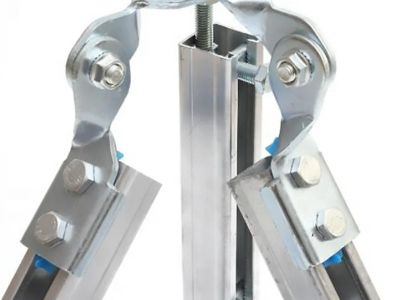
Understanding Cost Factors in Solar Panel Support Systems Purchases

Numerous factors can influence the pricing  of  solar panel support systems. Key considerations include:

Material Costs: The  choice of materials directly  affects pricing. For example, aluminum may be more expensive than steel but could offer long-term savings through durability and reduced maintenance.

Production Volume: Bulk  orders typically lower the  per-unit cost. Buyers should assess their project needs and consider negotiating  prices for  larger orders.

Customization: Custom  designs may incur higher costs  due to additional  engineering and manufacturing processes. Buyers should evaluate whether customization is necessary for  their application.

Shipping and Handling: Transportation costs can add significantly to  the overall  price. Understanding shipping logistics and potential tariffs for imported products can help in budgeting.

Installation Costs: Consideration should also be  given to installation fees. Some support  systems may require specialized labor,  impacting overall project costs.

Common Problems with Solar Panel Support Systems and Effective Solutions

Buyers  may encounter several common issues when working with solar panel support  systems. Understanding these problems can lead to proactive solutions:

Instability in High Winds: Some support systems may not be adequately designed for areas with high  wind speeds. To mitigate this, selecting a system with a robust design and appropriate anchoring solutions is crucial.

Corrosion and Wear: Exposure to environmental elements can lead to corrosion, particularly in coastal regions.  Choosing materials  with appropriate surface treatments can  enhance longevity. For example, Marine-Grade FRP Cable Tray | NEMA FG1 Fiberglass Cable Ladder for Offshore & Coastal Projects is specifically designed to withstand such conditions.

Difficult Installation: Complicated  support systems can increase installation time and  costs. Opting  for user-friendly  designs can simplify the installation process and reduce labor  expenses.

Incompatibility  with  Panels: Not all support systems are compatible  with  every solar panel type. Before purchasing, confirm that the chosen system can accommodate the specific panels being used.

Thermal Expansion  Issues: Variations  in temperature can cause materials to expand  and contract. Selecting systems designed to accommodate thermal movement can  prevent structural integrity issues.

Applications of Solar Panel Support Systems in Various Industries

Solar panel support systems find applications across numerous industries, each with unique requirements. Some notable applications include:

Commercial Buildings: Many businesses are installing solar panels on rooftops to reduce energy  costs. Support systems  designed for commercial applications must handle  larger loads and be aesthetically pleasing.

Agricultural  Sector: Solar installations on farms can power equipment and reduce reliance on grid electricity.  Here, robust support systems  are necessary to withstand outdoor conditions and ensure stability.

Industrial Facilities: Factories and warehouses often utilize solar  energy to  enhance sustainability. Support systems in these environments must be capable of  bearing significant  weight and providing long-term reliability.

Residential Installations: Homeowners  increasingly  adopt solar energy solutions. For residential projects, support systems should be easy to install and adaptable to various roof types.

Utility-Scale Solar Farms: Large solar energy installations require heavy-duty support systems capable of accommodating extensive arrays of panels. Systems in this sector  must  prioritize durability and efficient assembly.

By understanding the specifications, cost factors, common issues, and applications of  solar panel support systems, businesses can make informed decisions that align with their operational needs. Engaging with a reliable manufacturer like Shanghai Qinkai Industry  Co., Ltd. can further enhance the procurement process, ensuring that the chosen solutions meet  both  technical and budgetary requirements.

Sourcing from Reliable Suppliers

When sourcing solar panel support systems, reliability and quality should be  paramount. Buyers  should look for manufacturers  with  a proven track  record in producing  durable and efficient support systems. Key factors to consider  include:

Manufacturing  Experience: Choose suppliers like Shanghai Qinkai Industry Co., Ltd., which specializes in support systems and has experience in related manufacturing sectors. Established manufacturers are more likely  to have refined processes that ensure product quality. For instance, their SS316 Cable Tray Bracket — Corrosion-Proof Support Arms for Power Plant Cable Systems are designed to enhance durability.

Certification and Compliance: Verify that the supplier’s products meet  relevant industry  standards and certifications. These certifications often indicate  compliance with safety and performance regulations.

Customer Reviews and Testimonials: Investigate  feedback from previous customers. Positive reviews can provide insights into the  supplier’s  reliability, product quality, and customer service.

Customization Capabilities: Suppliers should  be  able to offer customizable solutions tailored to  specific project requirements. Understanding a manufacturer’s  flexibility can lead to better-suited products for unique applications.

Frequently Asked Questions

What types of solar panel support systems do you offer?

We supply ground-mounted, roof-mounted and adjustable tilt solar mounting structures, plus related C-channel supports and finished accessories for commercial and industrial installations.
Yes. Our structures fit most framed and frameless PV modules and can be customized for panel dimensions, weight and mounting hole patterns.
Yes. We manufacture seismic bracing systems and reinforced supports designed to meet regional wind and seismic requirements upon specification.
We provide tailored designs, custom C-channel steel profiles, finished supports and a full range of stamped parts to meet project-specific requirements.
We supply technical drawings, load calculations and material specifications. Certifications and test reports can be provided on request to match project standards.

Our Blog Posts

Complete Hardware Glossary: Solar Mounting, Pipe Supports and Cable Management Parts

21

Sep

Complete Hardware Glossary: Solar Mounting, Pipe Supports and Cable Management Parts

Understanding the components of solar mounting structures, pipe supports, and cable management parts is crucial for professionals in the manufacturing and construction industries. This complete hardware glossary will provide insights into evaluating ...
View More

Get a Free Quote

Our representative will contact you soon.
Email
Mobile/WhatsApp
Name
Company Name
Message
0/1000

Related product categories

Solar Panel Support Systems for Reliable Installations

Get a Free Quote

Our representative will contact you soon.
Email
Mobile/WhatsApp
Name
Company Name
Message
0/1000