
Key Factors for Sourcing Mesh Tray Cable

Get a Free Quote

Our representative will contact you soon.
Email
Mobile/WhatsApp
Name
Company Name
Message
0/1000

mesh tray cable

Mesh tray cables are essential components in electrical and  telecommunications  installations,  designed  to  support and organize cables while providing  ventilation  and protection. For B2B buyers, including purchasing managers, engineers, and product managers, understanding the  nuances of  mesh  tray cables is crucial  for making  informed sourcing decisions.  This article will delve into key specifications  to  consider, quality  and  cost factors, installation guidance, common problems and solutions, as  well as  potential cost  savings related to these products. For example, using a SS316 Wire Mesh Cable Tray can enhance the safety and organization of your cable systems.

Quality and Cost Considerations

Quality  and cost  are intertwined factors that significantly influence purchasing decisions. Buyers must consider the following:

Material Quality: Higher quality materials often come at a  premium but provide better durability  and longevity. For instance, investing in galvanized steel might incur higher upfront costs but can result in lower maintenance and replacement expenses over time.

Manufacturing  Processes: The manufacturing process impacts both quality and cost. Processes that ensure precision, like  automated welding and quality control inspections, may increase costs but also lead to  superior product performance.

Supplier Reputation: Partnering with a reputable manufacturer like Shanghai Qinkai Industry Co., Ltd. can mitigate risks associated with quality. A supplier with a track  record of reliable products and customer service can provide peace of mind.

Volume Discounts: Buyers should inquire about volume discounts for  larger  orders.  Understanding the  minimum order  quantities (MOQs) can also help in planning procurement to  optimize costs.

By  balancing quality against cost, buyers can make  informed decisions  that align with their  budget while  ensuring  that the mesh tray cables will perform as needed in their applications.
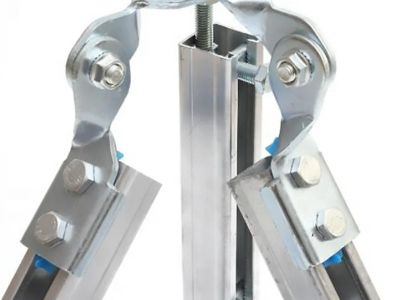
Installation Guidance for Optimal Performance of Mesh Tray Cable

Proper  installation is critical for the optimal performance of mesh tray cables. Here are some guidelines to ensure effective installation:

Planning Layout: Before installation, plan the layout  to  maximize space and accessibility. Consider future expansion  needs, allowing for easy  additions of cables as  required.

Mounting and Support: Ensure that the trays are securely mounted  and adequately supported at regular intervals. This helps to distribute the weight evenly and prevents sagging or damage over time.


Cable Management: Organize cables within the trays to avoid tangling and  ensure proper airflow.  Using cable ties or separators can facilitate better organization and  reduce wear on  the cables.

Follow  Manufacturer Instructions:  Always refer to the manufacturer's installation guidelines. This includes recommendations on spacing, support, and weight limits, which are designed to optimize the performance and lifespan of the tray.

Safety Considerations: Adhere to safety regulations during installation, particularly regarding electrical components. Ensure that  all installations comply with local  codes and standards to prevent  hazards.

By following these installation guidelines, buyers can enhance the efficiency and longevity  of their  mesh tray  cable systems.

Common Problems with Mesh Tray Cable and Effective Solutions

While mesh tray cables are  generally reliable, buyers may encounter  specific issues. Understanding these problems and their solutions can facilitate smoother  operations:

Corrosion:  If not properly treated, mesh  trays  can be susceptible to rust and  corrosion. To counter this, selecting trays with appropriate surface treatments like galvanization is essential. Regular inspections can also  help identify and address corrosion early.

Overloading: Exceeding the load capacity of a tray  can lead to structural  failure. Buyers should ensure that the load capacity is clearly marked and respected. Conducting periodic load assessments can help maintain safety.


Cable Damage: Improperly organized cables can lead to wear and tear. Implementing effective cable management practices, such as using protective covers and organizing cables, can  mitigate this risk.

Installation Errors: Mistakes during installation can lead to long-term issues. Thorough training for installation teams and following best practices can  help reduce errors.

Inadequate  Ventilation: Poor airflow can lead to  overheating of the cables. Buyers should  consider tray designs that promote ventilation and ensure that trays are  not overcrowded.

By proactively addressing these common issues, buyers can ensure that  their mesh tray cable  systems remain  functional and safe over time.

Cost Savings on Mesh Tray Cable Purchases

Finding ways to reduce  costs without compromising  quality is essential for B2B buyers. Here  are some strategies for achieving cost savings on  mesh tray cable purchases:

Bulk Purchasing: Buying in larger quantities may qualify  for discounts. This is especially beneficial for companies that  anticipate ongoing projects requiring extensive cable  management systems.

Supplier Negotiation: Establishing strong relationships with suppliers can lead to  better pricing. Negotiating terms, especially  for long-term contracts, can result in favorable pricing structures.

Lifecycle Cost  Consideration: Evaluating  the total  lifecycle cost, including installation, maintenance, and replacement,  is vital. Opting for more durable materials may have higher initial costs but can lower long-term expenses.

Comparative  Analysis: Regularly comparing suppliers and their offerings can help  identify better deals. Always assess not  just price but also quality and service levels.

Utilizing Custom Solutions: Often, suppliers can provide customized solutions tailored to specific needs, which can be more cost-effective than generic products. Customization can optimize performance and reduce waste.</p>

By implementing  these  cost-saving strategies, B2B buyers can maximize their budgets while securing high-quality mesh tray  cables that meet  their operational needs.

Key Specifications to Evaluate When Sourcing Mesh Tray Cable

When evaluating mesh tray cables,  several specifications  are critical to ensure they  meet the intended  application requirements.

Material Composition: Most mesh trays are made from  steel, aluminum, or fiberglass. Steel trays are robust and suitable for heavy loads, while aluminum is lighter and more resistant to corrosion. Fiberglass trays  may be  preferred in environments prone to chemical exposure.

Load Capacity: It's vital  to assess the load capacity, which  indicates how much  weight a tray can support without deformation or failure. This specification should align with the anticipated  cable load, including  any additional equipment.

Dimensions: The width, height, and length of the tray should be determined based on the installation  environment and the number of cables to be housed. A tray that is too small may cause overcrowding, while an  oversized tray could lead to unnecessary costs.

Surface Treatment: Surface treatments such as galvanization or  powder coating can  enhance corrosion resistance. This  is especially important in outdoor or industrial settings where exposure to moisture and chemicals is likely. Choosing materials like those used in the HDG Cable Ladder can provide additional protection.

Compliance and Certifications: Buyers should verify that the trays meet relevant industry standards  and certifications, such as UL listings or IEC compliance, which ensure safety and reliability.

Understanding these specifications helps buyers select the right mesh  tray cable suited to their operational needs,  ensuring long-term performance and safety.

Frequently Asked Questions

What is a mesh tray cable used for?

Mesh tray cable organizes and supports power, data, and control cables in commercial and industrial installations, providing ventilation, easy access, and routing protection.
Our mesh trays are typically made from hot-dip galvanized steel, stainless steel, or epoxy-coated steel to resist corrosion and meet different environment needs.
Select size by cable volume, weight, and tray span. Consider tray width, depth, and recommended load capacity to ensure safe support and compliance with standards.
Yes. With appropriate corrosion-resistant finishes and proper seismic bracing or supports, mesh trays are suitable for outdoor and seismic applications.
Yes. We provide custom lengths, bends, fittings, supports, and compatible accessories like cable ties and covers to integrate with C-channel supports and bracing systems.

Our Blog Posts

Complete Hardware Glossary: Solar Mounting, Pipe Supports and Cable Management Parts

21

Sep

Complete Hardware Glossary: Solar Mounting, Pipe Supports and Cable Management Parts

Understanding the components of solar mounting structures, pipe supports, and cable management parts is crucial for professionals in the manufacturing and construction industries. This complete hardware glossary will provide insights into evaluating ...
View More

Get a Free Quote

Our representative will contact you soon.
Email
Mobile/WhatsApp
Name
Company Name
Message
0/1000

Related product categories

Key Factors for Sourcing Mesh Tray Cable

Get a Free Quote

Our representative will contact you soon.
Email
Mobile/WhatsApp
Name
Company Name
Message
0/1000