
Choosing the Right Cable Tray for Your Needs

Get a Free Quote

Our representative will contact you soon.
Email
Mobile/WhatsApp
Name
Company Name
Message
0/1000

cable tray

Cable trays  are essential components in industrial and commercial settings, designed to  support and manage  electrical cables and  wiring systems. Selecting the  right cable tray can  significantly impact efficiency, safety, and compliance with industry standards. B2B  buyers, including purchasing  managers and engineers,  often face  challenges in navigating  product specifications, material options, and supplier reliability. This article  aims to provide insights  into choosing the  right  cable tray for your  industrial  needs, understanding cost factors, and  ensuring  supplier reliability, among  other critical aspects.

Understanding Cost Factors in Cable Tray Purchases

The cost of cable trays can vary widely based  on  several factors. Material  type is one  of the primary considerations  — for example,  aluminum trays are generally lighter and easier to install but may not offer the same strength as steel trays, which might be necessary for heavy-duty applications, such as those using HDG Cable Ladder — ISO 1461 Hot-Dip Galvanized Cable Ladder for Coastal & Marine Service.

Manufacturing processes also impact pricing. Trays produced through advanced methods like stamping  or welding  may involve higher  initial  costs  but can  provide better durability and performance  in the long run. Additionally, consider the total cost of ownership, which  includes  installation, maintenance, and potential replacement costs over time.

Lastly,  minimum order quantities (MOQs) can influence pricing. Suppliers often  have different MOQs depending on the material and customization options,  which  may affect budget planning. Understanding these cost  factors will help you make a more informed purchasing decision.
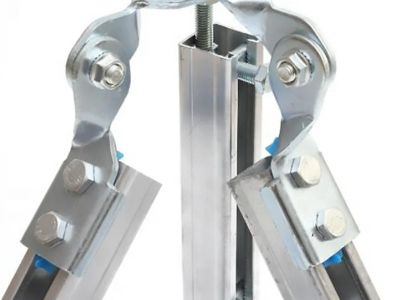
A Comprehensive Overview

Cable trays come  in various types, including ladder, perforated, and solid bottom trays. Each  type serves different purposes. Ladder trays offer excellent ventilation and are ideal for large cable bundles,  while  perforated  trays allow for better air circulation around cables, reducing overheating. Solid  bottom trays, on the other hand, provide maximum protection for cables and  are suited for environments with high moisture or dust  levels.

The manufacturing capabilities of a supplier, such  as Shanghai Qinkai Industry Co.,  Ltd., can also influence your decision. They offer a full range of  products,  from  standard trays to custom  solutions, ensuring that you can find  the right fit  for your needs. Additionally,  quality control processes are vital; a well-established supplier will have systems in  place  to ensure consistent  product quality.

Benefits of Different Materials Used in Cable Tray Manufacturing

Different materials used in  cable tray  manufacturing each  come  with unique advantages.

Steel: Known for its strength and durability,  steel  cable trays are commonly used in heavy-duty applications. They can handle significant weight loads and are suitable for harsh environments. However, they may require protective coatings to resist corrosion.

Aluminum:  Lightweight and resistant to  corrosion, aluminum  trays are easy to install and handle. They are ideal for applications where weight is a critical factor, such as in overhead installations.

Plastic: Non-conductive  and resistant to chemicals, plastic trays are suitable for environments where electrical conductivity must be minimized.  However, they may not support  heavy cable loads as effectively as  metal trays.

Stainless Steel: Offering superior corrosion resistance, stainless steel is ideal for marine or industrial applications where the  environment may be harsh.  It combines strength with aesthetic appeal, making it a popular choice for visible installations.

Choosing the right material involves  understanding the  specific environmental conditions and load requirements of your  installation.

How to Ensure Supplier Reliability When Ordering Cable Trays

Selecting a  reliable  supplier is crucial for ensuring quality and consistency in your cable tray orders. Start by evaluating  potential  suppliers based on their manufacturing capabilities and experience in the industry. A reputable supplier should  have a track record  of timely deliveries, high-quality  products, and adherence to industry standards.

Requesting samples before placing a bulk order is an essential step.  This allows  you to assess  the product's quality, dimensions, and finishing. Ensure to check for any defects  or inconsistencies in the samples provided.

Additionally,  inquire about the  supplier’s  quality control processes. A robust quality management system indicates that  the supplier is committed to maintaining high standards. Certifications relevant  to the industry, such as ISO, can also serve as indicators of reliability.

Lastly, consider customer reviews and  testimonials. Feedback from other businesses can provide valuable insights into the supplier’s performance and service reliability, helping you make a more informed decision.

By focusing on these elements,  you can navigate  the complexities of purchasing cable trays and ensure that you select  products that meet your specific industrial needs.

Choosing the Right Cable Tray for Your Industrial Needs

When  selecting a cable tray, there are several factors to consider that align with your specific  industrial requirements. Start  by determining the application environment. For  instance, if the  installation is in  a chemical plant, the cable tray  must resist corrosion, which may necessitate materials like stainless steel or specialized coatings. You may also consider options like SS316 Wire Mesh Cable Tray — Marine-Grade Stainless Steel Cable Management for Offshore & Coastal Installations for added durability.

Next, assess  the load requirements. Different trays have  varying load capacities, so it is vital to  calculate the total weight of the cables, including  any additional equipment that may  be supported. Additionally, consider  the  dimensions of the tray, as  these will  affect installation space and cable management  efficiency.

Finally, think about customization needs. Many manufacturers,  like Shanghai  Qinkai Industry Co., Ltd., offer tailored solutions  to fit unique specifications. Customization can include specific sizes, materials, and accessory integration, enhancing both functionality and aesthetics.

Frequently Asked Questions

What types of cable trays do you manufacture?

We produce ladder, perforated, solid-bottom and wire mesh cable trays, plus custom profiles to suit electrical, solar and industrial installations.
Materials include galvanized steel, stainless steel and pre-galvanized steel with finishes like hot-dip galvanizing, electro-galvanizing and powder coating.
Yes. We supply C-channel supports, brackets, seismic bracing, splice plates, covers, fasteners and other accessories for complete tray systems.
Yes. We offer custom sizes, hole patterns, bends and stamped components to meet project specifications and drawing requirements.
We follow industry fabrication standards, provide technical drawings, sizing guidance, and can support bulk production, packaging and logistics for construction and solar projects.

Our Blog Posts

Complete Hardware Glossary: Solar Mounting, Pipe Supports and Cable Management Parts

21

Sep

Complete Hardware Glossary: Solar Mounting, Pipe Supports and Cable Management Parts

Understanding the components of solar mounting structures, pipe supports, and cable management parts is crucial for professionals in the manufacturing and construction industries. This complete hardware glossary will provide insights into evaluating ...
View More

Get a Free Quote

Our representative will contact you soon.
Email
Mobile/WhatsApp
Name
Company Name
Message
0/1000

Related product categories

Choosing the Right Cable Tray for Your Needs

Get a Free Quote

Our representative will contact you soon.
Email
Mobile/WhatsApp
Name
Company Name
Message
0/1000