
Understanding Tray Ladder Rack Specifications

Get a Free Quote

Our representative will contact you soon.
Email
Mobile/WhatsApp
Name
Company Name
Message
0/1000

tray ladder rack

Understanding tray ladder racks is crucial for  professionals in various industries,  particularly in manufacturing and electrical installations.  A tray ladder rack is designed to support and manage cables in a structured and efficient  manner, ensuring safety and accessibility.  Buyers often have specific concerns, such  as  load capacity,  material quality, and installation requirements.  This article will  delve into  the  essential  aspects of  tray ladder racks,  providing insights that will  assist purchasing  managers, engineers,  and product managers in  making  informed decisions.

Tray Ladder Racks You Can Trus

Selecting reliable tray ladder racks involves evaluating not just the product specifications, but also the manufacturer’s reputation and quality assurance processes.  Shanghai Qinkai  Industry  Co., Ltd., for instance, emphasizes high-quality manufacturing  standards, which include:

Quality Control:  Robust quality control processes ensure that each rack meets  stringent performance  standards. Before bulk production, manufacturers often conduct tests on sample racks to verify  load capacity and material integrity.

Certifications: While specific certifications were not  provided, it is advisable to choose manufacturers with recognized  industry certifications. This  could include ISO certification, which indicates adherence to international quality management standards.

Customer Support: A trustworthy supplier  will offer  comprehensive support,  including  assistance with installation and troubleshooting. This can be crucial for minimizing downtime during installation.

By partnering with a reputable manufacturer,  you can ensure that your  tray ladder racks are reliable and meet your  operational  needs.
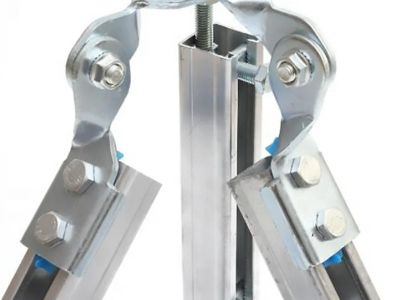
Where to Source Reliable Tray Ladder Racks Wholesale

Sourcing wholesale tray ladder racks requires  strategic planning and  evaluation of potential suppliers.  Here are key factors to  consider:

Direct Manufacturers vs. Distributors: Buying directly from manufacturers like Shanghai  Qinkai Industry Co., Ltd. can  often yield better pricing and  customization options. Distributors may offer a wider range of products but  could add markups.

Trade Shows and Industry Events: These venues are excellent for discovering potential suppliers and assessing  their products  in person. Engaging with manufacturers directly  allows you to ask specific questions about their  capabilities and quality assurance processes.

Online B2B Marketplaces: Platforms such as Alibaba, ThomasNet, and Global Sources can connect you with manufacturers and suppliers. Always check reviews and ratings to gauge  reliability.

Request Samples: Before committing to a bulk order, request samples to evaluate the quality  firsthand.  This step can help you ensure that  the product meets your specifications and expectations.

By carefully  vetting suppliers  and exploring various sourcing options, you can secure high-quality tray ladder racks that align with your  project  requirements.

Installation Guidance for Efficient Tray Ladder Rack Setup

Proper installation of tray ladder racks is  essential for  ensuring their effectiveness and longevity. Here  are practical steps and considerations:

Planning  the Layout: Before installation, develop a layout  plan that considers the cable paths and load  distribution. This planning helps to avoid conflicts with existing  structures and  ensures optimal  cable management.

Tools and Equipment: Ensure you  have the necessary tools such as drills, wrenches, and levelers. Using appropriate hardware, including bolts and brackets, is crucial for securing the racks effectively.

Follow Manufacturer Guidelines: Always refer to the installation manual provided by the manufacturer. This document typically contains essential specifications, including spacing  recommendations  and installation techniques.

Safety Precautions:  Ensure that all safety protocols are observed during installation. This includes using personal protective equipment  (PPE) and ensuring that the load-bearing surfaces are secure and stable.

Post-Installation  Inspection: Once installed, conduct a thorough inspection to confirm that the racks are level, securely fastened, and capable of supporting the intended load. Regular  maintenance checks should be scheduled to ensure ongoing performance.

Following these guidelines  not only facilitates  a smooth installation process but also enhances the operational efficiency of the tray ladder racks.

Common Problems with Tray Ladder Racks and Their Solutions

Despite their robust design, tray ladder racks can present challenges during use. Here are  some common issues and practical solutions:

Overloading: One  of the most frequent problems  is exceeding the load capacity. Ensure that the weight of the cables does not surpass  the  specified limits of the rack. Regularly review and adjust cable  layouts as  needed.

Corrosion: In environments with high humidity or  exposure to chemicals, corrosion can occur. Opt for racks with appropriate surface finishes, such as galvanized or  powder-coated options, to prevent rust and degradation.

Installation Errors: Improperly installed racks can lead to sagging or misalignment. Always double-check measurements  before installation and follow  the  provided guidelines closely.

Cable Management Issues: Cables may become tangled or damaged if  not properly managed. Utilize  cable ties and supports to organize and secure cables along the racks, ensuring they  remain accessible and safe.

By  anticipating these common  problems and implementing proactive  measures,  you can ensure that your tray ladder racks function  effectively and maintain their integrity over time.

Understanding Tray Ladder Rack Specifications for Bulk Orders

When considering bulk orders of tray ladder racks, it's essential to understand the specifications that will meet your  project's needs. Key specifications to consider include:

Material: The most common materials for  tray ladder  racks include steel, aluminum, and  fiberglass.  Steel racks offer strength and durability,  while aluminum is lighter and resistant to corrosion. Fiberglass provides excellent resistance to chemical exposure but may not support  heavy  loads as effectively. For marine and coastal installations, consider our SS316 Wire Mesh Cable Tray, which is designed for such environments.

Load Capacity:  Ensure that the tray ladder rack can support the weight of the cables it will carry. Load capacity is usually specified  in pounds per linear foot (PLF) and should be evaluated based on the total cable weight and  environmental  conditions.

Dimensions: Standard widths range from 12 inches to 36 inches, with heights typically between 4 inches and 8  inches. Custom dimensions  can  be requested based on specific project needs.

Finish: The surface treatment—whether galvanized, powder-coated, or painted—affects durability and resistance to environmental factors.  Galvanized finishes are recommended for outdoor applications due to their  corrosion resistance. If you're looking for a durable option, our HDG Cable Ladder is an excellent choice.

These specifications should align  with the intended application, ensuring that the tray ladder rack  performs optimally  in its environment.

Frequently Asked Questions

What is a tray ladder rack used for?

A tray ladder rack supports and organizes cable trays and wiring runs, providing easy access, load support, and ventilation for cables in industrial and commercial installations.
They are typically made from steel or stainless steel with protective finishes like hot-dip galvanizing or powder coating for corrosion resistance and long service life.
Yes. Our tray ladder racks are compatible with C-channel supports, finishing brackets, seismic bracing, and related mounting accessories for secure installation.
Load capacity varies by model and span; we provide specifications for different tray widths and spans to meet project requirements—contact us for detailed load tables.
Yes. We manufacture custom lengths, widths, hole patterns, finishes, and stamped accessories to meet specific project needs and installation standards.

Our Blog Posts

Complete Hardware Glossary: Solar Mounting, Pipe Supports and Cable Management Parts

21

Sep

Complete Hardware Glossary: Solar Mounting, Pipe Supports and Cable Management Parts

Understanding the components of solar mounting structures, pipe supports, and cable management parts is crucial for professionals in the manufacturing and construction industries. This complete hardware glossary will provide insights into evaluating ...
View More

Get a Free Quote

Our representative will contact you soon.
Email
Mobile/WhatsApp
Name
Company Name
Message
0/1000

Related product categories

Understanding Tray Ladder Rack Specifications

Get a Free Quote

Our representative will contact you soon.
Email
Mobile/WhatsApp
Name
Company Name
Message
0/1000