
Cable Tray and Cable Ladder Solutions for Businesses

Get a Free Quote

Our representative will contact you soon.
Email
Mobile/WhatsApp
Name
Company Name
Message
0/1000

cable tray cable ladder

Cable trays and cable ladder systems play a critical role in  the organization and support of  electrical wiring and cables  in both commercial and  industrial settings. These  systems  are essential for maintaining safety, ensuring efficient installation, and facilitating future maintenance. For purchasing managers  and engineers,  understanding  the  nuances of cable tray and  cable ladder  solutions is crucial. This article aims  to clarify what  buyers should know when selecting these products,  the  differences between materials, cost factors, and common  issues,  while guiding  you on how to choose the right supplier.


Steel vs. Aluminum Solutions

The choice between steel and  aluminum cable trays or ladders depends  largely on  the specific application and environmental factors. Steel trays are  known for their strength and durability, making them suitable for heavy-duty  applications where  significant load-bearing is required.  They are often galvanized or coated to enhance corrosion resistance, particularly in demanding  environments.

In contrast,  aluminum trays  are lightweight and  resistant to corrosion, making them  ideal for applications where weight savings are critical, such as in overhead installations. Aluminum also offers excellent thermal  conductivity, which can be beneficial in certain electrical applications. However, it is generally less robust than steel and may not be suitable for  very heavy  loads.

Each material has its unique specifications and  advantages, and  the appropriate  choice should be made based on  the project’s requirements, including load capacity, environmental conditions, and  installation location.
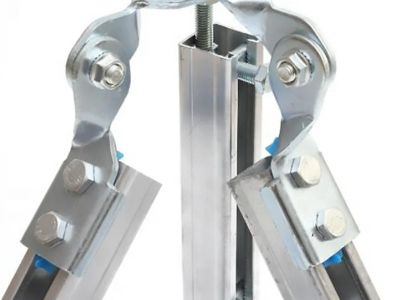
Understanding Cost Factors for Bulk Orders of Cable Trays

Pricing for cable trays and ladders  can  vary significantly based on several factors. Bulk orders typically come with discounts, but buyers should also consider the following:


Material Type: As mentioned,  steel and aluminum have different price points. Steel  is often less expensive than aluminum, but the total cost might  include additional treatment or coatings for corrosion resistance.

Customization Requirements:  Customized solutions can increase costs. Providing specific dimensions or  finishes will  require additional  manufacturing processes that may not be necessary for standard products.

Order Quantity: Larger orders  generally lead to lower per-unit costs. However, it’s important to balance the  need for inventory with cash flow considerations.

Shipping and Packaging: Costs can also be influenced by the required shipping methods and packaging. Ensure to discuss these factors  with your  supplier  to avoid unexpected expenses.

Lead Times: Faster production and delivery may incur additional costs. Plan  your  project timelines accordingly to optimize your budget.

Understanding these factors will  aid in negotiating better  terms with suppliers and ensuring that your budget aligns with  your project needs.

Common Issues with Cable Trays and Solutions for Reliable Performance

Despite their robust design, cable trays can encounter several common issues, which  include:

Corrosion: In humid or chemical-laden environments, corrosion can significantly affect the performance of cable trays. To  combat this,  selecting  trays with appropriate coatings, such as galvanization or powder coating, is essential.

Overloading: Exceeding the load capacity of a cable tray can lead  to structural failure.  Buyers should  ensure  that the  trays  are designed to support the specific weight of  the cables they will carry. Consulting with the manufacturer for load  specifications is  advisable.

Improper Installation: Installation errors can compromise the effectiveness of cable trays. Ensure that installation guidelines are followed meticulously and that personnel are trained or certified to  install these systems.

Insufficient Support: Trays require  proper support at specified intervals to  prevent sagging. Review the installation manual for support spacing and  ensure that these recommendations are  followed.

By anticipating these  issues and understanding how to mitigate them, buyers can ensure reliable performance  from their cable tray systems.

How to Choose the Right Cable Tray Supplier for Your Business

Selecting the right supplier for cable trays and cable ladders involves evaluating several factors to ensure they align with your business needs:

Manufacturing  Capabilities: Assess the supplier's production  capabilities, including their equipment and technology.  A manufacturer like Shanghai Qinkai Industry Co., Ltd. with a diverse product portfolio and  advanced machinery  can often provide better quality and efficiency.

Customization Options: Determine  if the supplier can offer  custom solutions to meet specific project requirements. Flexibility in design and production can be a significant  advantage.

Quality Assurance Practices:  Investigate the supplier's  quality control processes. Look for certifications that demonstrate their commitment to  quality,  which can include ISO certifications or industry-specific standards.

Experience and Reputation: A  supplier with a solid reputation in the industry and a track record of successful projects can offer peace of mind. Seek  references or case studies that illustrate their reliability.

Customer Support: Evaluate the level of customer service offered. Effective communication  and support can make a significant  difference, especially when addressing issues  that may arise during the project.

By  carefully considering these factors, buyers can select a cable  tray supplier  that not only meets their immediate needs but also supports long-term project success.

What Buyers Should Know

When considering cable tray and  cable ladder systems, buyers should focus on several key factors: material selection, load capacity, installation requirements, and compliance  with industry  standards. Cable trays can be made from  various materials,  including steel and aluminum, each offering different advantages and disadvantages depending  on  the application. Understanding  the specific needs of your project—such  as the environment  in  which the trays  will be  installed, the weight of the cables to be supported, and any applicable  building codes—will guide you in choosing the  right product. For example, the SS316 Wire Mesh Cable Tray is designed specifically for such environments.

<p>Buyers should also consider customization options. Many manufacturers,  including Shanghai Qinkai Industry Co., Ltd., offer tailored solutions to meet  specific project requirements. Custom dimensions, finishes, and additional accessories can enhance the functionality and aesthetics of your installation. Additionally, quality control processes are  vital;  ensure that the products you are considering have  been rigorously tested to meet safety and performance standards.

Frequently Asked Questions

What is a cable tray cable ladder?

A cable tray cable ladder is a metal support system with rungs providing open support for power and data cables, enabling ventilation and easy access for installation and maintenance.
We offer cable ladders in galvanized steel, stainless steel, and pre-painted steel to suit corrosion resistance, load capacity, and indoor or outdoor applications.
We supply a range of load ratings and span options; capacity depends on material, rung spacing and span. Provide project loads and span requirements for a recommended specification.
Yes. We provide customized widths, lengths, rung spacing, finishes and punched patterns to meet electrical codes and site-specific mounting or support needs.
Yes. We supply compatible C-channel supports, brackets, seismic bracing, fasteners and accessories, plus technical guidance for selection and installation.

Our Blog Posts

Complete Hardware Glossary: Solar Mounting, Pipe Supports and Cable Management Parts

21

Sep

Complete Hardware Glossary: Solar Mounting, Pipe Supports and Cable Management Parts

Understanding the components of solar mounting structures, pipe supports, and cable management parts is crucial for professionals in the manufacturing and construction industries. This complete hardware glossary will provide insights into evaluating ...
View More

Get a Free Quote

Our representative will contact you soon.
Email
Mobile/WhatsApp
Name
Company Name
Message
0/1000

Related product categories

Cable Tray and Cable Ladder Solutions for Businesses

Get a Free Quote

Our representative will contact you soon.
Email
Mobile/WhatsApp
Name
Company Name
Message
0/1000