
Heavy-Duty Unistrut Trolleys for Industrial Applications

Get a Free Quote

Our representative will contact you soon.
Email
Mobile/WhatsApp
Name
Company Name
Message
0/1000

unistrut trolley heavy duty

Heavy-duty Unistrut  trolleys  are essential components for  various industrial applications, providing reliable support for overhead systems such as cable  trays, piping, and HVAC  units. For B2B buyers, the  primary concerns often revolve around load capacity, compatibility with existing  systems,  and  ease of installation. This article offers practical insights  into selecting  the right  Unistrut trolley for  heavy-duty  applications, key specifications for wholesale buyers, sourcing options, pricing considerations, and  common installation  issues,  ensuring that purchasing managers, engineers, and  product managers can  make informed decisions.


Key Specifications of Heavy-Duty Unistrut Trolleys for Wholesale Buyers

When purchasing heavy-duty Unistrut trolleys,  wholesale buyers should  focus on several critical  specifications, including:

Load Capacity: Trolleys typically have load ratings  ranging  from a few hundred to several  thousand pounds.  For example, a trolley rated for 1,500 pounds may be suitable for  lighter applications, while those rated  for 5,000 pounds or more cater to heavier installations.

Material: Most heavy-duty trolleys are made from steel or aluminum. Steel offers higher strength  and stability, while aluminum  is lighter and resistant to corrosion, making it suitable for various applications.

Wheel Diameter and Material: The diameter of  the wheels impacts the  trolley's ability to traverse uneven surfaces. Larger wheels are advantageous for navigating rough terrain, while materials like nylon or polyurethane provide smoother operations.

Finish: The type of finish applied to a trolley can influence its resistance to environmental factors.  Options include galvanized steel for corrosion resistance or powder-coated  finishes for  enhanced aesthetics and durability.

Dimensions: Ensure that the trolley's dimensions align with  your system requirements, including  width and height, for optimal  fit  and function.

Understanding these specifications helps buyers make informed choices that align with their specific operational needs.
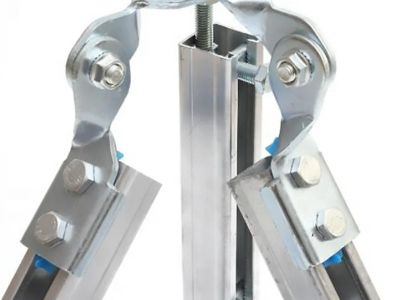

Where to Source Reliable Heavy-Duty Unistrut Trolleys for Your Projects

Sourcing reliable heavy-duty Unistrut trolleys  can be done through  several  channels.  Manufacturers like Shanghai Qinkai Industry Co., Ltd., specializing in support systems and metal components, can provide high-quality trolleys that meet diverse industry needs.

When evaluating suppliers, consider their manufacturing capabilities  and experience.  A manufacturer  with a proven track record in producing heavy-duty systems ensures adherence to  quality standards and reliable performance. Additionally, inquire about customization options,  as many  suppliers offer trolleys tailored  to specific applications.

Trade shows and industry exhibitions can also serve as  valuable sourcing platforms, allowing buyers to connect directly with manufacturers, assess product  samples, and discuss specific requirements. Online  directories  and B2B marketplaces provide  an extensive  list of suppliers, but it's essential to  vet  each company’s reputation  and customer reviews to ensure reliability.

Understanding Pricing for Bulk Unistrut Trolley Orders

Pricing for bulk  orders of heavy-duty Unistrut trolleys is influenced by several  factors,  including material, design complexity, and order volume. Generally, larger orders can lead to price  breaks due to reduced manufacturing costs per unit.

Buyers  should also consider  additional costs such as  shipping, which can  vary  depending  on the destination and  logistics  involved. In  some cases, suppliers may offer  discounted freight rates for bulk orders, making it advantageous for buyers  to consolidate  shipments.

It’s  advisable to request detailed quotations that  break down costs, including any potential customization charges. Understanding the total cost structure will  help in budgeting  and financial planning for projects.

Common Installation Issues with Unistrut Trolleys and Their Solutions

Installation of heavy-duty Unistrut trolleys can present challenges, often stemming from compatibility and alignment issues. One common problem is misalignment of the trolley with the Unistrut channel, which can occur if the trolley  is not seated correctly or if the channel is not level. To mitigate this, ensure that all installation surfaces are leveled and check trolley dimensions against the channel specifications before installation.

Another  issue may arise from  insufficient clearance between the  trolley  and adjacent structures, which  can lead to friction or obstruction during  operation. It’s crucial to account  for adequate spacing and test  the trolley's movement before finalizing the installation.

Lastly, buyers should be aware of proper  maintenance practices  to prolong the life of the trolley. Regular inspections for signs of wear  and tear, lubrication of moving parts, and prompt addressing of any operational issues can  prevent more significant  problems down the line.


By  understanding these  common installation challenges and their solutions, buyers  can ensure  a smoother installation process and enhance the longevity of their heavy-duty  Unistrut trolleys.

How to Choose the Right Unistrut Trolley for Heavy-Duty Applications

Selecting the appropriate heavy-duty Unistrut trolley  involves  evaluating several key factors. First, assess the load capacity required for your application. Trolleys are rated based on their maximum load-bearing capacity,  which  must  align with your specific needs. For instance, a trolley designed to support heavier loads may have a more robust construction,  often utilizing high-strength steel.

Next, consider the trolley's compatibility  with existing Unistrut framing systems. Ensure that the trolley fits securely within  the  C-channel's  dimensions to avoid installation issues. Additionally, examine factors such as  wheel design and material; nylon wheels may offer quieter operation, while steel wheels  can provide  greater durability and  resistance to  wear.

Finally, it’s essential to evaluate the environment in which the trolley will be used. For example, if the trolley will be  exposed to corrosive substances, opting for a  galvanized or powder-coated finish can enhance  longevity  and  performance.

Frequently Asked Questions

What is the load capacity of the unistrut trolley heavy duty?

Load capacity varies by model; typical heavy-duty trolleys support 500–2000 kg. Contact us with required load and span for a precise specification.
Compatible with standard C-channel steel sizes including 41mm, 48mm, and custom finishes. Provide channel dimensions to confirm fit.
Available in galvanized steel, stainless steel, and powder-coated finishes to resist corrosion and suit indoor or outdoor installations.
Yes. Trolleys integrate with seismic bracing systems and solar mounting structures when specified for dynamic loads and mounting requirements.
Yes. We provide custom stamping parts, finished supports, and related accessories to match specific load, fit, and installation needs.

Our Blog Posts

Complete Hardware Glossary: Solar Mounting, Pipe Supports and Cable Management Parts

21

Sep

Complete Hardware Glossary: Solar Mounting, Pipe Supports and Cable Management Parts

Understanding the components of solar mounting structures, pipe supports, and cable management parts is crucial for professionals in the manufacturing and construction industries. This complete hardware glossary will provide insights into evaluating ...
View More

Get a Free Quote

Our representative will contact you soon.
Email
Mobile/WhatsApp
Name
Company Name
Message
0/1000

Related product categories

Heavy-Duty Unistrut Trolleys for Industrial Applications

Get a Free Quote

Our representative will contact you soon.
Email
Mobile/WhatsApp
Name
Company Name
Message
0/1000