
Guide to Selecting Wire Mesh Trays for Your Needs

Get a Free Quote

Our representative will contact you soon.
Email
Mobile/WhatsApp
Name
Company Name
Message
0/1000

wire mesh tray

Wire mesh  trays  are essential  components  in  various industries,  used for efficient  cable  management  and support systems. When selecting wire mesh  trays,  buyers often consider factors such  as material  strength, load capacity, and application suitability.  This article  will guide you through the  key specifications, quality evaluation,  and  common challenges associated  with wire mesh trays, helping you make informed purchasing  decisions.

Evaluating the Quality of Wire Mesh Trays for Bulk Orders

Quality evaluation of wire mesh trays is essential,  particularly when placing bulk  orders. Here are some key points to consider:

Manufacturing Standards: Check if the  manufacturer adheres to industry standards or certifications, which can indicate quality assurance in their production processes. Look for compliance with relevant standards such as ISO or ASTM.

Material Testing: Request documentation on material testing  and quality control processes. This can include tensile strength  tests, corrosion resistance  tests, and  load capacity testing to  ensure  that the trays meet performance requirements.

Sample Approval: Before placing a bulk order, insist on receiving samples. This allows  you to inspect the  product firsthand, checking for dimensions, finish, and overall quality. Testing samples under actual operating conditions can also  reveal potential  issues not apparent in  standard checks.

Supplier  Reputation: Research the supplier's reputation in the industry. Reviews, case studies, and testimonials from other customers can provide insight into  their reliability and the quality of their products.

After-Sales Support: Evaluate  the support  offered post-purchase. A  reputable  supplier should provide assistance in case of any issues, including replacement parts or guidance on installation.

Focusing on these quality evaluation aspects will help ensure that your bulk order of wire mesh trays meets your expectations and operational requirements.

A Contractor's Guide

For contractors, selecting and installing wire mesh trays requires careful planning  and execution. Here’s a practical  guide:

Assess Project Requirements: Begin by analyzing the project specifications, including the types of cables, the environment (indoor or outdoor), and any specific load requirements. This will inform the type and size of wire mesh trays needed.

Installation  Planning: Plan the installation layout  before  commencing work. Consider  the spacing between supports, which should typically be no more than 1.5 meters apart, to maintain structural integrity  under load.

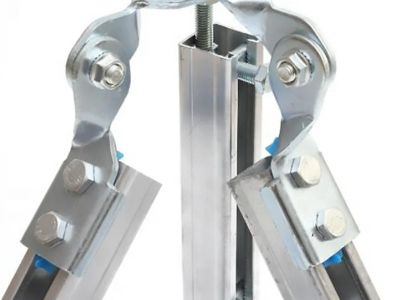
Use the Right Tools: Ensure you have  the necessary tools for installation, including cable ties, clamps, and fasteners. Using the right hardware is  crucial for securing the trays safely.

Follow Safety Guidelines: Adhere to  safety protocols during installation  to  prevent accidents. This includes using personal protective equipment (PPE) and ensuring that all installations comply with local electrical and building  codes.

Regular  Inspections: After installation, conduct regular inspections to ensure the trays remain secure and free  from  damage. This proactive approach can prevent future issues and  maintain operational efficiency. Additionally, regular inspections are important in settings like Underground Parking Lots, where environmental conditions can vary significantly.

By following this guide, contractors can ensure a smooth installation  process  and long-lasting performance from wire  mesh trays.

Where to Find Reliable Wire Mesh Tray Suppliers for Your Business

Finding a reliable supplier  for wire mesh trays is vital  for ensuring  a consistent supply of quality  products. Consider the following avenues:

Industry Trade Shows: Attend industry-specific trade shows and  exhibitions where manufacturers showcase their products. This  not only allows for direct interaction but also provides opportunities  to  see the products in person.

Online Directories: Utilize online B2B marketplaces and directories, such as Alibaba, ThomasNet, or Made-in-China, to discover various suppliers. Look for those  with  verified ratings and  reviews from previous customers.

Networking: Leverage professional networks and industry associations to gather recommendations. Colleagues in similar industries can provide insights into their experiences with specific suppliers.

Manufacturer Websites: Research manufacturer websites, like Shanghai  Qinkai Industry Co., Ltd., which specialize in wire mesh trays and related products.  A reputable website often contains detailed product catalogs,  specifications, and contact information  for inquiries.

Request Quotes: Once you have shortlisted potential suppliers, reach out to request  quotes. Providing detailed specifications and quantities will help suppliers give  accurate pricing and lead times.

By employing these strategies, businesses can find trustworthy suppliers that  meet their  wire mesh tray  needs effectively.

Common Problems with Wire Mesh Trays and Effective Solutions

While wire  mesh trays are generally reliable, some common issues can arise during use. Here are a few problems and their solutions:

Corrosion: If wire  mesh trays are exposed  to  moisture and corrosive environments without proper treatment, they can  rust and degrade. Solution: Select trays with appropriate protective coatings, like galvanization or powder coating, and ensure proper installation to minimize moisture accumulation.

Overloading: Exceeding the load capacity of wire mesh trays can lead to bending or  failure. Solution:  Always adhere  to the manufacturer’s load specifications and regularly inspect installed trays to ensure they are  not overloaded.

Poor Installation: Improper installation can lead to sagging or instability. Solution: Follow manufacturer  guidelines for spacing and support,  and ensure that all fittings and fasteners are  secured according to best  practices.

Debris Accumulation: Over time, debris can  accumulate in wire mesh trays, affecting  cable performance. Solution: Implement regular maintenance checks to clean trays and ensure that they remain free from obstructions.

Incompatibility with Accessories: Sometimes, the trays may not fit well with the required accessories, leading  to installation challenges. Solution: Verify that all accessories are compatible with the selected wire mesh trays before purchase, and consult  the manufacturer for recommendations on compatible products.

By anticipating these common issues and implementing  proactive solutions, users can enhance  the longevity and effectiveness of wire mesh trays in  their systems.

Key Specifications to Consider When Selecting Wire Mesh Trays

When  choosing wire mesh trays, several key specifications should  be evaluated to ensure  optimal performance for your specific application.

Material: Most  wire mesh  trays are made from steel, aluminum,  or galvanized  materials. Steel offers high strength and  durability, making it ideal for heavy-duty applications, while aluminum is lighter and resistant to corrosion,  suitable for environments with  moisture.

Load Capacity: It's crucial to understand the load capacity of the wire mesh tray, which indicates the maximum weight it can support. This is determined by the gauge of the wire and the spacing between the supports. Buyers should assess their specific application needs to avoid overloading, which can  lead to structural failure. For heavy-duty applications, especially in settings like Power Plants, selecting the right load capacity is critical.

Dimensions: The size of the wire mesh tray matters significantly. Common widths range from 200mm to 600mm, and  the depth can vary based on installation  requirements. Ensure the tray  dimensions align with the intended installation space and the type of cables being managed.

Surface Treatment: Consider any surface treatments applied to the wire mesh trays, such as powder coating or galvanization, which provide  additional corrosion resistance and enhance longevity, especially in harsh environments.

Compatibility with Accessories: Ensure  the wire mesh  tray can accommodate necessary accessories, such as connectors and support brackets,  that may be needed for installation.

By understanding these specifications, buyers can select wire mesh trays that not  only meet their immediate needs but also provide long-term performance.

Frequently Asked Questions

What is a wire mesh tray used for?

Wire mesh trays support and route electrical cables, providing ventilation, easy access, and cable protection in industrial and commercial installations.
We offer trays in mild steel, stainless steel, and galvanized finishes to suit corrosion resistance and load requirements.
Yes. We customize tray dimensions, mesh aperture, finishes, and load ratings to meet specific project and support system needs.
Trays install on C-channels, brackets, or seismic bracing systems using clamps and hardware; compatible with our finished supports and mounting accessories.
Yes. We supply product drawings, load ratings, material specs, and manufacturing quality documentation upon request to support engineering and procurement.

Our Blog Posts

Complete Hardware Glossary: Solar Mounting, Pipe Supports and Cable Management Parts

21

Sep

Complete Hardware Glossary: Solar Mounting, Pipe Supports and Cable Management Parts

Understanding the components of solar mounting structures, pipe supports, and cable management parts is crucial for professionals in the manufacturing and construction industries. This complete hardware glossary will provide insights into evaluating ...
View More

Get a Free Quote

Our representative will contact you soon.
Email
Mobile/WhatsApp
Name
Company Name
Message
0/1000

Related product categories

Guide to Selecting Wire Mesh Trays for Your Needs

Get a Free Quote

Our representative will contact you soon.
Email
Mobile/WhatsApp
Name
Company Name
Message
0/1000