
Choosing the Right Strut Channel for Your Project

Get a Free Quote

Our representative will contact you soon.
Email
Mobile/WhatsApp
Name
Company Name
Message
0/1000

strut channel

Strut channels are essential  components in  various support systems,  providing structural integrity for electrical,  mechanical, and piping installations.  As  a B2B buyer, understanding the specifications and  applications of strut channels can significantly impact  your  project's success.  This article will  address your main  concerns, such as  material selection,  quality assurance, and sourcing reliable suppliers, guiding  you through  the decision-making  process  to choose the right strut  channel for your needs.


How to Compare Strut Channel Products for Quality Assurance

Quality assurance is a critical  aspect when evaluating strut channels. Here are  some essential  factors to  consider  during your comparison:

Material Quality: The material used in manufacturing strut channels affects their performance and durability. Look for  channels made from high-grade steel with certifications, such as ASTM standards, that  ensure  they meet  industry specifications.


Surface Treatment: Surface treatments, such as galvanization, play a vital role in preventing corrosion. Inspect the finish of the channel to ensure it provides adequate protection for your specific  application.

Manufacturing Standards: Investigate the manufacturer's production  processes and quality control  measures.  Reputable manufacturers will have robust quality assurance protocols  in place, such as ISO certifications, to  ensure consistent  product quality.

Testing and Performance Data: Request data related  to load testing, fatigue resistance, and other performance metrics. Understanding how  a product has been tested  under real-world conditions provides assurance of its reliability.
Where to Source Reliable Strut Channel Suppliers for Bulk Orders

Sourcing  strut channels  in bulk requires careful consideration of  potential suppliers.  Here are key steps  to identify reliable manufacturers:


Research and Reviews: Start by researching manufacturers online. Look for reviews and testimonials from other B2B buyers to  gauge the reliability of suppliers.


Industry Experience: Suppliers with  a proven track record in the industry are typically more trustworthy. Consider their years of experience and the range of industries they serve, such as Marine Engineering.

Local vs. International Suppliers: Depending on your location and  delivery needs, you may want to  consider local manufacturers  to reduce shipping times and costs. However,  international suppliers may offer competitive pricing; weigh the  benefits against lead times.

Request  Samples: Before placing a large  order, request  samples of the  strut channels to evaluate their  quality firsthand. Inspect the samples for material integrity and adherence  to specifications.

Cost Factors to Consider When Purchasing Strut Channels Wholesale

Understanding the cost factors involved in purchasing strut  channels is crucial for effective  budgeting and negotiation:


Material Costs: The choice of material significantly  influences pricing. For example, stainless steel  strut channels are generally  more expensive than  carbon steel due to their corrosion resistance and durability.

Order  Quantity: Most manufacturers offer tiered pricing based on order volume. Bulk purchases typically result in lower per-unit costs, so consider your project’s requirements and budget constraints.

Customization  Fees: If you require customized  channels, be aware that these  may incur additional  fees. Discuss customization options  upfront to understand the potential  impact on your overall costs.


Shipping  and  Handling: Factor in shipping costs, which can vary  significantly based on the supplier's location and your delivery requirements.  Ensure you request shipping quotes as part of your overall  cost assessment.

Evaluating Strut Channel Material Advantages for Your Applications

The material used in strut channels directly affects their  performance and suitability  for various applications. Here’s a  breakdown of common materials and their advantages:


Carbon Steel: Carbon steel channels are cost-effective and offer good strength for  a wide range of applications.  However, they may require protective coatings  for outdoor use to prevent rusting.

Stainless Steel: Known for its corrosion  resistance, stainless steel is ideal for applications in harsh environments, such  as coastal or chemical processing areas. While it comes at a higher cost, its longevity can justify the  investment.

Aluminum: Lightweight and resistant  to  corrosion, aluminum strut  channels are suitable for applications where weight savings are critical. They are commonly used in lightweight structures and can  also be customized easily.

Coated Steel: Channels that are coated with materials like zinc or powder  coatings provide enhanced protection against environmental factors. These coatings can extend the life of  carbon  steel channels and are an excellent compromise between cost and durability.

Understanding the specific requirements and characteristics of strut channels  can help B2B buyers make informed purchasing decisions. By focusing on material selection, quality assurance, and reliable sourcing, you can ensure that  your support systems  are robust and effective for their intended applications.

Choosing the Right Strut Channel for Your Project Needs

Selecting the appropriate strut channel begins with understanding the specific  requirements of your project.  Factors such as load capacity, environmental conditions, and compatibility with existing  systems play crucial roles  in your decision.

Load  Capacity: Strut channels are rated for  various load limits. It’s essential  to assess the  loads  your installation will bear, including static and dynamic  loads, to choose a channel that meets or exceeds  these requirements. Overestimating or underestimating load needs can lead to structural failures.

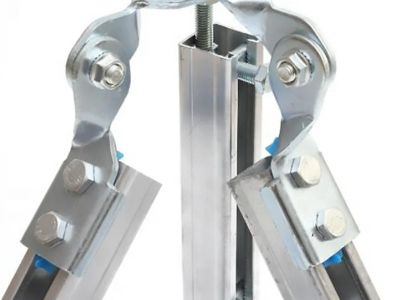
Dimensions and Configurations: Strut channels come in different  sizes and  configurations, such as C-channels or U-channels. Consider the available space in your installation area and the equipment that will  be mounted to ensure proper fit and function. For complex installations, understanding the layout, such as in Underground Parking Lots, can also guide your choices.

Environmental Considerations: If your project is in a harsh environment  (e.g., coastal areas with  high  salt exposure), consider corrosion-resistant materials or coatings. Stainless steel  or galvanized channels may be suitable for outdoor applications, while standard carbon steel might suffice for indoor use.

Customization Needs: If your project has unique  requirements, such as specific lengths or additional holes for mounting, confirm the manufacturer’s customization capabilities. Custom solutions can often save  time and resources in the long run.

Frequently Asked Questions

What is a strut channel and its main use?

A strut channel (C-channel steel) is a metal support profile used to mount, brace, and support cable trays, piping, HVAC, and solar structures in electrical and mechanical installations.
We offer standard widths and depths, various lengths, and finishes including pre-galvanized, hot-dip galvanized, and stainless steel to suit indoor, outdoor, and corrosive environments.
Yes. We provide custom lengths, punching patterns, hole sizes, and stamped accessories to meet specific support system and seismic bracing requirements.
Load capacity depends on channel size, material, span, and mounting. We supply technical data and load tables to help select the correct channel for your application.
Yes. We manufacture finished supports, brackets, clamps, and seismic bracing components, and can provide installation guidance and technical documentation for projects.

Our Blog Posts

Complete Hardware Glossary: Solar Mounting, Pipe Supports and Cable Management Parts

21

Sep

Complete Hardware Glossary: Solar Mounting, Pipe Supports and Cable Management Parts

Understanding the components of solar mounting structures, pipe supports, and cable management parts is crucial for professionals in the manufacturing and construction industries. This complete hardware glossary will provide insights into evaluating ...
View More

Get a Free Quote

Our representative will contact you soon.
Email
Mobile/WhatsApp
Name
Company Name
Message
0/1000

Related product categories

Choosing the Right Strut Channel for Your Project

Get a Free Quote

Our representative will contact you soon.
Email
Mobile/WhatsApp
Name
Company Name
Message
0/1000