
Aluminum Cable Ladder: Key Specifications and Solutions

Get a Free Quote

Our representative will contact you soon.
Email
Mobile/WhatsApp
Name
Company Name
Message
0/1000

aluminum cable ladder

Aluminum  cable ladders are essential support structures used  to  organize and  protect electrical  cables  in various industrial and commercial applications. Particularly  valued for their lightweight and corrosion-resistant  properties, aluminum cable ladders  offer durability  and ease  of  installation. This article will  address key concerns for  B2B  buyers, including specifications, supplier reliability,  cost factors,  common issues, and the diverse applications of aluminum cable ladders,  thereby guiding purchasing managers and engineers in  making  informed decisions. For example, aluminum cable ladders are often used in various settings, including Marine Engineering and Industrial Workshops.

Finding Reliable Suppliers of Aluminum Cable Ladders

Identifying trustworthy  suppliers is crucial for ensuring product quality  and reliability.  Here are some tips for evaluating potential suppliers:

Manufacturing Experience: Look for suppliers with a proven track record in manufacturing aluminum cable ladders. Companies like Shanghai Qinkai Industry Co., Ltd. have specialized capabilities in producing a range of support systems, including cable ladders, which is indicative of reliability.

Certifications and Quality Control: Check if suppliers possess relevant industry certifications, which  may include  ISO standards. A robust quality control process ensures that products meet  specified standards before  delivery.

Customer Reviews and References: Request references or  read customer reviews to gauge the  supplier's reputation. Feedback from previous clients can provide insights  into product quality, customer service, and  delivery timelines.

Customization Capabilities: Suppliers should offer customization options  to meet specific project requirements. This flexibility can be a  significant  advantage, especially for unique applications.

After-Sales  Support: Reliable suppliers provide after-sales support, including  installation guidance and warranty services. Ensure that the supplier  is willing  to assist you post-purchase if issues arise.


By conducting thorough research and  asking the right questions, buyers can find suppliers who align with their quality and service expectations.
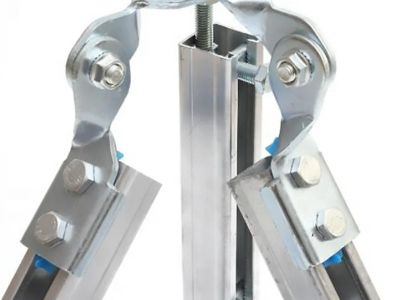

Cost Factors to Keep in Mind When Purchasing Aluminum Cable Ladders

Understanding the cost structure of aluminum cable ladders is essential  for  budgeting and maximizing value. Key cost factors  include:

Material  Costs: The price of aluminum fluctuates based on market conditions. Buyers  should  be  aware  that high-quality aluminum may incur a higher initial cost but can offer long-term savings due to  durability  and lower maintenance needs.

Customizations:  Additional features, such as  specialized coatings or unique dimensions, can increase costs. It’s beneficial to  clearly outline project requirements to avoid unexpected expenses.

Order Quantity: Most suppliers have Minimum Order Quantities (MOQs). Ordering in  bulk may yield discounts, but buyers should assess their actual  needs to avoid  over-purchasing.

Shipping and Handling: Consider the logistics of delivery, including  shipping fees and potential customs duties for international orders. Understanding these costs upfront  can prevent budget overruns.

Lead Times: Shorter lead times may incur additional costs. Balance the  urgency of your project with the associated costs to make the most informed decision.

By comprehensively evaluating these cost factors, buyers can make strategic purchasing decisions that align with their budgets and  project timelines.

Common Problems with Aluminum Cable Ladders and Their Solutions

While aluminum cable ladders are generally reliable, several common issues can arise during installation and usage:

Corrosion: Although aluminum is resistant to corrosion, exposure to  certain  environments can lead to degradation. To mitigate this, ensure that the selected ladder has appropriate surface treatments and  is suitable  for the intended environment.

Improper Load Distribution:  Overloading a  ladder  or incorrectly distributing cables can  compromise its integrity. Buyers should  adhere to the manufacturer's  load recommendations and ensure that cables  are evenly spaced and secured.

Installation Errors: Incorrect installation can lead to safety hazards. It's critical to  follow the manufacturer’s installation guidelines and, if  necessary, consult with professionals during the installation process.

Physical Damage: Aluminum can bend or dent if subjected  to impact. During transportation and installation, care should  be taken to avoid physical damage, and ladders  should  be  inspected regularly for signs of wear.

By recognizing these  potential problems and implementing preventive measures, buyers can enhance the longevity and performance of their aluminum cable  ladders.

Applications of Aluminum Cable Ladders in Various Industries

Aluminum cable  ladders are versatile and find  applications across multiple industries:

Construction: Construction  sites often use aluminum cable ladders to manage electrical wiring and ensure safety around high-voltage areas.  Their lightweight  nature allows for easy handling and repositioning.

Manufacturing: In manufacturing plants, aluminum cable  ladders  support extensive electrical systems, facilitating cable organization and protection in complex machinery  and  assembly lines.


Data  Centers: The IT  sector relies on aluminum cable ladders for efficient cable management,  helping to maintain airflow and reduce overheating risks  in server  rooms.

Telecommunications: Telecommunication facilities utilize aluminum cable ladders to manage fiber optic and copper cables, ensuring that installations remain neat and accessible  for maintenance.

Renewable Energy: In solar energy installations, aluminum  cable ladders support wiring from solar panels to  inverters and storage systems, offering reliable protection against environmental elements. In addition, they are vital in settings such as Power Plants, where efficient cable management is crucial.

By understanding the specific applications of aluminum cable ladders in these industries,  buyers  can better assess their needs and integrate these solutions into their projects effectively.

Key Specifications to Consider for Aluminum Cable Ladders

When selecting aluminum cable ladders, several specifications warrant careful evaluation:

Material  Thickness: The thickness of the  aluminum affects both strength and weight.  Common thicknesses range from 2.0 mm to 5.0 mm. Thicker ladders can support heavier loads and are more suitable for demanding environments, while thinner ladders are lighter and easier to handle.

Width and Height: The dimensions of the ladder should align with the number of cables it will carry and the installation  space available. Standard widths range from 150 mm to 600 mm, while heights can  vary based on the specific application requirements.

Load Capacity: Load capacity is critical for ensuring safety and functionality. Manufacturers usually provide load ratings based  on specific testing. Buyers should confirm that the chosen ladder meets or exceeds their operational load requirements.

Surface Treatment: Anodization or powder coating can  enhance corrosion resistance. Depending on the  environment (e.g., coastal  regions vs.  indoors),  it’s  advisable to select a ladder with appropriate surface  treatments to extend service life.

Accessory Compatibility:  Ensure  that the aluminum cable ladder is compatible with  necessary accessories, such as cable clamps,  bends, and junctions, to  guarantee a complete installation.

By paying attention to these  specifications, buyers can select  aluminum cable ladders that meet their specific project needs, ensuring both performance and safety.

Frequently Asked Questions

What is an aluminum cable ladder?

An aluminum cable ladder is a lightweight, corrosion-resistant tray system for routing and supporting power and communication cables in industrial and commercial installations.
We offer multiple rung spacing, widths, and side rail heights to suit load and cable volume requirements. Custom lengths and perforation patterns can be manufactured.
Yes. Aluminum resists corrosion and is ideal for outdoor, marine, and corrosive environments. Surface treatments can be added for enhanced durability.
Install using our C-channel supports, brackets, and seismic bracing systems. Components are designed for easy bolting, alignment, and secure mounting.
Yes. We manufacture complementary stamped parts, finished supports, and accessories tailored to project specifications for seamless integration.

Our Blog Posts

Complete Hardware Glossary: Solar Mounting, Pipe Supports and Cable Management Parts

21

Sep

Complete Hardware Glossary: Solar Mounting, Pipe Supports and Cable Management Parts

Understanding the components of solar mounting structures, pipe supports, and cable management parts is crucial for professionals in the manufacturing and construction industries. This complete hardware glossary will provide insights into evaluating ...
View More

Get a Free Quote

Our representative will contact you soon.
Email
Mobile/WhatsApp
Name
Company Name
Message
0/1000

Related product categories

Aluminum Cable Ladder: Key Specifications and Solutions

Get a Free Quote

Our representative will contact you soon.
Email
Mobile/WhatsApp
Name
Company Name
Message
0/1000